
Choosing the right Waterproof Toiletry Bag can make travel cleaner, calmer, and more organized. A leaking shampoo bottle can soak clothing within minutes. I learned this after one loose cap ruined a carefully packed weekend bag. Small details matter.
This guide examines seven practical points before you buy. It considers waterproof materials, sealed seams, zipper quality, interior capacity, cleaning, hanging features, and long-term durability. A truly useful bag should protect your belongings, not merely look attractive online. Check whether the fabric feels coated, whether the zipper closes smoothly, and whether the lining can be wiped clean. These details often reveal more than polished product photos.
Size also deserves honest attention. A compact case may fit a toothbrush and travel bottles, but it can become frustrating when every item is tightly squeezed. A larger design offers space, yet may occupy too much luggage. There is no perfect choice. Your routine decides what works.
Reliable selection requires more than trusting labels. Look for clear material information, realistic dimensions, sturdy stitching, and reviews describing actual use. If possible, test the bag beside your usual toiletries before traveling. Consider airport security rules and container limits where relevant. These seven tips will help you compare features carefully and avoid paying for unnecessary extras. A waterproof claim is helpful, but practical construction matters more. Even the best bag can fail when overloaded or poorly closed.
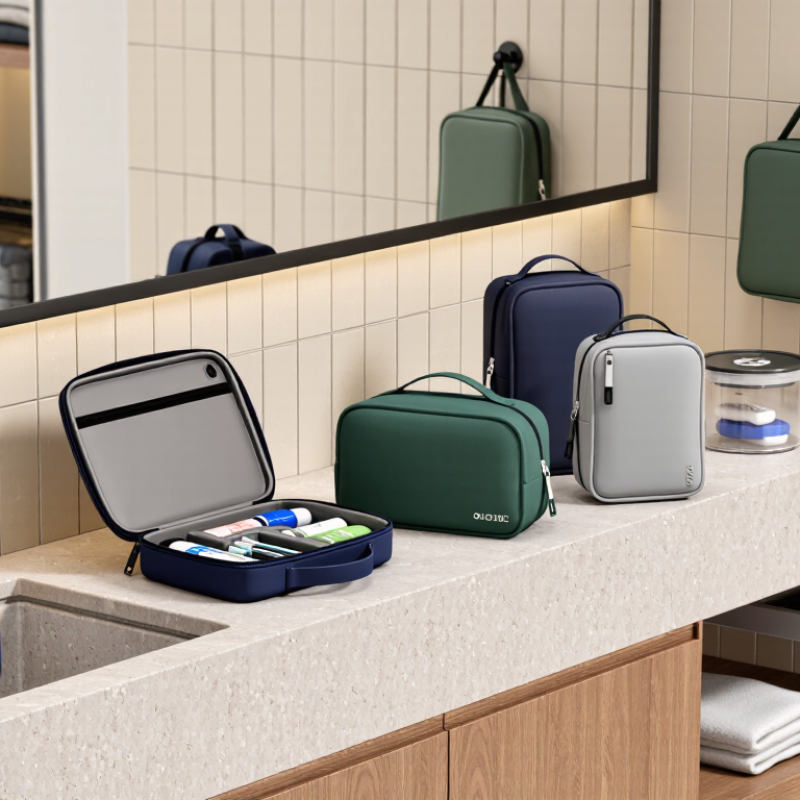
Define your toiletry bag’s waterproofing needs before comparing colors, pockets, or size. A shower-side bag faces splashes, steam, and wet countertops. A suitcase bag faces leaking shampoo bottles and damp towels. These are different risks. Grand View Research valued the global luggage market at about $36.47 billion in 2022, with projected growth through 2030. That scale reflects frequent travel, but it does not mean every traveler needs full waterproof protection.
Start with the exposure level. For occasional bathroom use, coated fabric and a water-resistant zipper may be enough. For pool trips, camping, or shared bathrooms, choose welded seams, a sealed lining, and a roll-top or protected zipper.
Check whether the seller provides an IP rating under IEC 60529. Many toiletry bags do not. That absence matters. “Waterproof” can describe the fabric only, not the seams. I once trusted a smooth exterior and ignored the zipper. Moisture still entered near the opening. A small test helps: place tissues inside, close the bag, and splash water over it for several minutes. Do not submerge it unless the instructions allow immersion.
The bag’s contents also define the need.
Solid soap and sealed bottles require less protection than liquid skincare in thin containers. The 2024 UN Tourism report recorded approximately 1.4 billion international arrivals in 2024, increasing opportunities for cramped, unpredictable storage. Look for a wipe-clean interior, drainage if suitable, and enough structure to prevent bottles from crushing one another. Perfect protection is rarely necessary. Overspecifying it can add weight and make drying slower.
A reliable toiletry bag starts with its material. Polyester with a polyurethane coating resists splashes and dries quickly. Nylon can feel stronger, but its coating quality matters more than fiber names. The 2024 Textile Exchange Materials Market Report shows recycled polyester reached 99% of recycled synthetic fiber production. Recycled content can be useful, but it does not prove waterproof performance. Check the fabric specification, coating thickness, and abrasion results.
Seams often reveal weak construction. Look for tightly stitched seams, sealed tape, or welded edges around the base. ISO 811 measures fabric resistance through hydrostatic pressure, reported in millimetres. A higher result usually indicates better resistance, although it does not guarantee a dry interior after repeated bending. Open the bag. Look inside, too. Loose threads, exposed needle holes, and uneven binding deserve caution. The American Society for Testing and Materials also lists standardized water-penetration methods for coated fabrics under ASTM D751.
Zippers need equal attention. Choose a zipper with a covered track, smooth movement, and a fabric guard behind the teeth. Pull it ten times before buying. It should not snag or separate. Examine the corners, handle attachments, and bottom panel, where toiletry bags receive rough handling. The International Organization for Standardization links durability testing with repeated use, but household testing remains imperfect. I once trusted a thick exterior and ignored a poorly protected zipper. That mistake was obvious after one wet suitcase. Test it wet. A small leak can ruin everything nearby.
7 Tips for Choosing a Waterproof Toiletry Bag?
Choose the Right Size and Internal Organization
When choosing a waterproof toiletry bag, size should match your routine, not your optimism. Pack the products you actually use for three days. A compact bag works for toothbrushes, a small cleanser, medication, and travel-sized toiletries. Longer trips need extra space, but avoid oversized designs. They become heavy and waste valuable luggage space. Measure your usual bottles before buying. A bag that looks roomy online may feel cramped in real use.
Internal organization matters as much as capacity. Look for separate sections, elastic loops, and a washable pocket for damp items. Clear compartments help you find small tools quickly. Wide openings are useful in hotel bathrooms with limited counter space. I prefer upright storage because bottles stay visible and are less likely to leak into everything. Strong zippers and sealed seams also deserve attention. Waterproof fabric alone does not guarantee reliable protection.
I once chose a bag with many narrow pockets. It looked organized, but my larger bottles never fit. That mistake taught me to value flexible space. Check whether the compartments can hold both flat tubes and round containers. Leave a little room for unexpected items. Do not fill every corner. A practical test is simple: place your real toiletries inside, close the zipper, and gently turn the bag upside down. If items shift badly or the closure strains, the design is probably too small.
| Tip | What to Check | Practical Recommendation | Why It Matters | Useful Specification |
|---|---|---|---|---|
| 1. Match the Size | Estimate the number of products you normally carry. | Choose a compact bag for daily essentials, a medium bag for weekend trips, or a large bag for extended travel and family use. | A bag that is too small becomes difficult to close, while an oversized bag wastes luggage space. | Compact: approximately 1–2 L Medium: approximately 2–4 L Large: approximately 4–8 L |
| 2. Measure Your Toiletries | Compare the bag’s internal dimensions with the height of your bottles and grooming tools. | Allow extra height for pump tops, toothbrushes, razors, and travel containers. | Internal capacity can be reduced by curved corners, thick padding, and separate compartments. | For upright bottles, look for an internal height of at least 2–3 cm more than the tallest container. |
| 3. Prioritize Waterproof Construction | Inspect the fabric, lining, zipper area, and seams. | Select a coated or laminated outer fabric with a water-resistant lining and covered or sealed seams. | Water-resistant construction helps contain leaks and protects clothing from splashes in bathrooms. | Look for wipe-clean materials such as coated polyester, TPU-coated fabric, or laminated nylon. |
| 4. Select the Right Internal Layout | Check whether the compartments suit your routine. | Choose at least one main compartment, one zipped pocket for small items, and elastic loops or slots for bottles. | Separate storage prevents products from shifting, leaking onto one another, or becoming difficult to find. | Useful features include 2–4 elastic loops, 1 zipped pocket, and a wide-opening main section. |
| 5. Consider Hanging Storage | Decide whether you need access in compact bathrooms. | Choose a hanging hook if you frequently use shared bathrooms, hotel bathrooms, or cruise-ship cabins. | Hanging the bag keeps toiletries visible and reduces contact with wet countertops. | Check that the hook is strong enough to support the fully packed bag and folds securely when stored. |
| 6. Keep Travel Rules in Mind | Plan for air-travel liquid restrictions where applicable. | Use refillable containers and keep liquids together in a transparent, resealable bag when required by airport security. | A toiletry bag itself does not replace security packaging requirements for liquids. | For flights departing from or within many regions, individual liquid containers are commonly limited to 100 ml, subject to local rules. |
| 7. Check Cleaning and Durability | Look at the base, stitching, zipper, and ease of cleaning. | Choose reinforced seams, a smooth wipe-clean lining, and a flat or structured base. | These features help the bag stand upright, resist daily wear, and recover from spills more easily. | Prefer corrosion-resistant zipper components and a lining that can be wiped with mild soap and water. |
Quick selection guide: Choose the smallest waterproof toiletry bag that comfortably fits your complete routine, leaves a little room for access, and provides separate storage for liquids, tools, and small accessories.
7 Tips for Choosing a Waterproof Toiletry Bag
Tip 1: Check the packed size before buying. A compact bag should fit inside your carry-on without pressing against the zipper. Tip 2: Look for a strong handle and a hanging hook. These features help in small bathrooms and shared spaces. Tip 3: Test the weight when empty. Extra pockets can improve organization, but they may reduce portability.
Tip 4: Examine the seams, zipper, and base carefully. Water-resistant fabric is useful, but weak stitching can still cause leaks. Tip 5: Choose a flexible material that feels thick without becoming stiff. I once selected a very light bag, and its corners soon showed wear. That experience changed how I judge durability. A slightly heavier design may last longer.
Tip 6: Prioritize a wide opening and smooth interior lining. Toothpaste, shampoo, and shaving products can leave sticky residue behind. A wipeable surface makes daily cleaning quicker. Tip 7: Check whether the bag can dry fully after washing. Trapped moisture may create unpleasant odors over time. Rinse it with mild soap, then leave every compartment open to air-dry. Do not assume “waterproof” means maintenance-free. Some bags resist splashes but cannot handle complete soaking, so read the care instructions and inspect the construction before relying on it during travel.
7 Tips for Choosing a Waterproof Toiletry Bag
Compare Features, Price, and Travel-Specific Value
Global travel is expanding again. IATA’s 2024 passenger forecast projected 4.7 billion air travelers. UN Tourism also reported 1.4 billion international arrivals in 2024. A dependable toiletry bag now needs more than a glossy label. Check seven details: waterproof fabric, sealed seams, strong zippers, washable lining, hanging hardware, internal pockets, and a compact shape. “Water-resistant” is not the same as waterproof. Look for welded seams or a tested water-protection rating. A clear liquids pocket can also speed up airport checks.
Price should reflect construction, not decoration. Compare the cost per use, not only the checkout price. A low-cost bag may work for short trips, yet fail after repeated washing. A premium option should offer sturdier stitching, smoother access, and better organization. Travel-specific value matters most when space is limited. Choose a flat design for carry-on packing, or a hanging design for small hotel bathrooms. Leave room for medication and refillable containers.
I once chose the cheapest option. The zipper broke beside a sink. That was poor judgment. Still, expensive does not automatically mean reliable. Read independent reviews, inspect close-up photos, and check the return policy. Consumer testing methods often examine leakage, abrasion, and repeated opening cycles, but not every seller publishes such evidence. My practical test is simple: fill the bag, close it, and place it on a dry towel overnight. A damp towel changes the decision.