Top Benefits of Prototype Injection Molding for Fast Product Development?
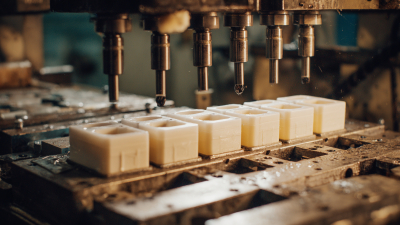
Prototype injection molding is transforming product development. This process allows companies to create physical prototypes quickly and cost-effectively. The ability to test designs before mass production is invaluable. It helps identify potential flaws early on.
Developers can iterate rapidly with prototype injection molding. This accelerates the feedback loop, making it easier to refine concepts. The shortened timeline enhances innovation potential. It also reduces the risk of costly mistakes in later stages.
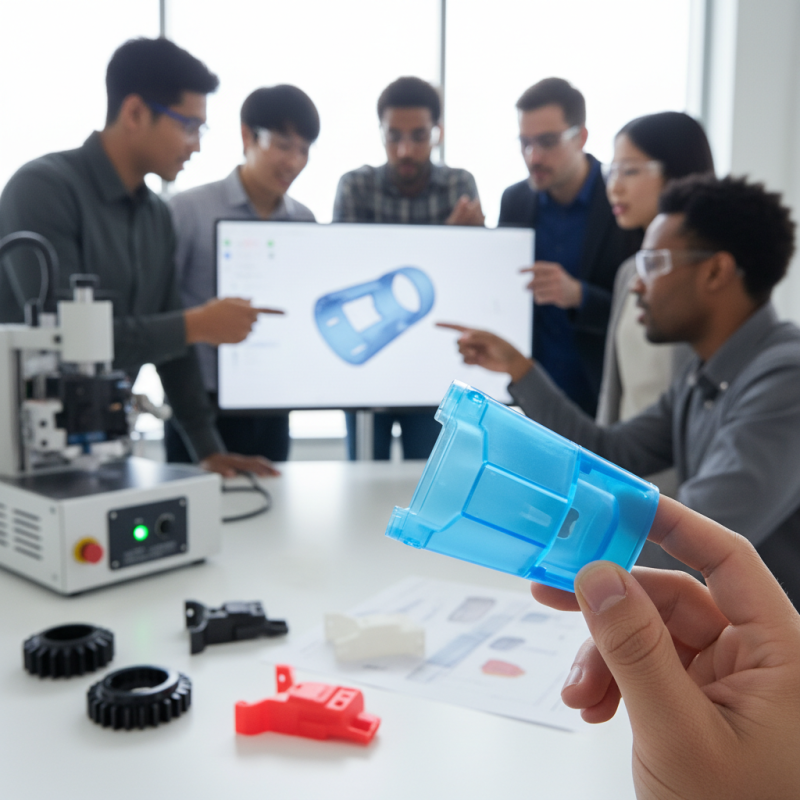
Moreover, using prototype injection molding streamlines collaboration among teams. Engineers and designers can work closely to improve product features. This teamwork fosters creativity and results in higher quality products. However, it’s crucial to regularly assess the prototype outcomes. Continuous evaluation can reveal areas for improvement. This ensures the final product meets market demands effectively.
Top Benefits of Prototype Injection Molding for Fast Product Development
Prototype injection molding is a powerful tool for rapid product development. This method allows for the creation of functional prototypes in a short timeframe. Using this process, designers can test their ideas more effectively. The ability to iterate quickly is critical in today’s fast-paced market.
One significant advantage of prototype injection molding is cost-effectiveness. Unlike traditional methods, it allows for producing small batches. This means companies can refine designs without incurring huge expenses. However, it’s essential to manage expectations. The initial investment in molds can be steep. Yet, the return often justifies this cost when compared to potential losses from product failures.
Another key benefit is the quality of prototypes produced. They closely resemble the final product, providing accurate performance insights. This realistic representation can reveal design issues early in the process. However, limitations exist. For instance, some materials may not be suitable for every prototype. This requires careful material selection. Balancing speed and quality is crucial when choosing the right approach for product development.
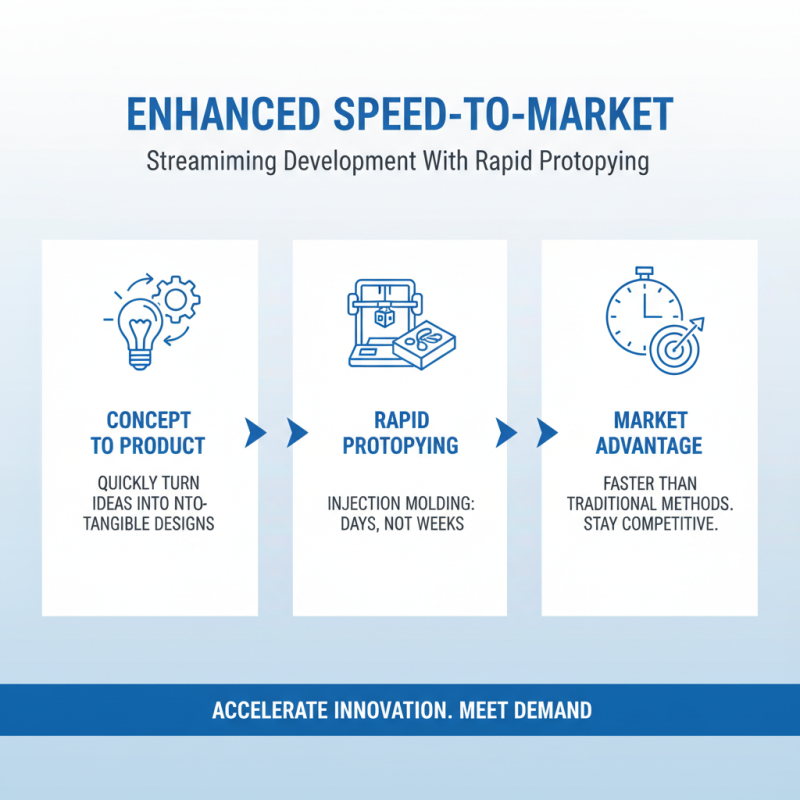
Enhanced Speed-to-Market: Streamlining Development With Rapid Prototyping
Rapid prototyping through injection molding significantly enhances speed-to-market. This method allows designers to turn concepts into tangible products quickly. Manufacturers can produce prototypes in a matter of days, which is faster than traditional methods. This speed can be crucial for businesses looking to stay competitive and meet consumer demand.
Tips: Maintain a flexible design strategy. Iterating quickly on prototypes can reveal potential flaws early on. Testing these models provides invaluable insights. You should expect some designs to need multiple revisions. This process can strain resources but ultimately leads to better final products.
Using prototype injection molding also fosters collaboration among teams. Engineers, designers, and product managers can openly discuss adjustments based on physical models. Gathering feedback can be challenging; not every suggestion will align with the original vision. However, listening to diverse perspectives can refine the product.
Tips: Document each iteration's changes carefully. This practice helps track the evolution of your design. It also allows for reflection on decisions made during the prototyping phase. Remember, mistakes are part of the learning curve. Embrace them to improve your future projects.
Cost Efficiency: Analyzing Material Savings and Waste Reduction Strategies
Prototype injection molding is a powerful tool for product development. It allows companies to produce high-quality prototypes quickly. This speed significantly impacts innovation timelines. However, producers must analyze costs carefully. Material savings and waste reduction are crucial to achieving cost efficiency.
Using advanced simulation techniques can identify the best materials for prototype injection molding. These methods help to minimize waste by predicting how materials will behave during the molding process. For example, employing optimized designs leads to less scrap material. This waste reduction strategy not only lowers costs but also supports sustainable practices.
Some manufacturers struggle with over-optimizing their processes, risking potential flaws in design. A balance is essential; too much focus on cost can compromise quality. It’s critical to continually assess production methods. Embracing a culture of feedback can lead to improvements. Adjustments based on practical outcomes often enhance both efficiency and product reliability.
Top Benefits of Prototype Injection Molding for Fast Product Development
| Benefit |
Description |
Material Savings (%) |
Waste Reduction (%) |
Production Time (days) |
| Cost Efficiency |
Minimizes production costs by reducing defects and excess materials. |
20% |
15% |
10 |
| Rapid Prototyping |
Allows for quick iterations and faster feedback cycles during product development. |
15% |
10% |
7 |
| Enhanced Accuracy |
Offers precise replicability which helps in reducing overall design errors. |
10% |
5% |
8 |
| Material Variety |
Access to a range of materials allows for design versatility and strength adaptations. |
12% |
7% |
12 |
| Scalability |
Easily scales up from prototypes to full-scale production without major modifications. |
18% |
20% |
14 |
Design Flexibility: Leveraging Iterative Testing for Optimal Product Refinement
Prototype injection molding offers significant advantages for product development, particularly in
design flexibility. This method allows for
rapid iterations, enabling designers to refine their concepts efficiently. By quickly producing prototypes, teams can gather
real-world feedback, which is essential for identifying potential flaws early in the process.
Iterative testing is a critical component of achieving optimal product refinement. Designers can make adjustments based on user insights
and testing results. Each iteration brings the product closer to the desired result. However, it's not always perfect. Sometimes, feedback may point to unexpected issues.
Balancing speed and quality is often a challenge. Designers may find themselves revisiting certain aspects multiple times.
Still, this iterative process enhances the overall reliability of the final product.
Ultimately, leveraging prototype injection molding helps teams remain agile. They can accommodate changes swiftly, ensuring that the final product aligns with market needs. The
hands-on experience gained through this process builds a deeper understanding of design implications. While the journey to an ideal product may have bumps, the reflexive nature of the
method allows for continuous improvement.
Quality Assurance: Ensuring High Tolerance and Precision in Prototypes
Prototype injection molding offers significant advantages in product development, particularly in quality assurance. The process begins with creating a design that is both functional and manufacturable. Each prototype can be tested rigorously, allowing for detailed analysis of performance and aesthetics. This testing phase is critical for identifying issues early, preventing costly mistakes in later production stages.
Ensuring high tolerance and precision in prototypes is paramount. Quality checks can be embedded at every step, from material selection to the final product. Dimensional accuracy often meets or exceeds industry standards, which is crucial for parts that must fit into larger assemblies. However, imperfections can still arise. Minor discrepancies during the molding process can lead to variances in finished prototypes. These challenges prompt continuous improvement in methods and materials used.
The journey of prototype development is filled with learning opportunities. Teams must adapt and refine their approaches based on prototype performance. This iterative process fosters innovation but also highlights the need for critical evaluation. Balancing precision with practical constraints is essential, and this ongoing reflection ensures that the final products meet market demands effectively.
Conclusion
Prototype injection molding offers significant advantages for fast product development, prominently enhancing speed-to-market through rapid prototyping techniques. This approach allows designers to swiftly create and test multiple iterations, facilitating a more streamlined development process. By focusing on cost efficiency, businesses can realize material savings and implement waste reduction strategies that lead to more sustainable practices.
Additionally, prototype injection molding provides substantial design flexibility, enabling iterative testing that helps refine product designs for optimal performance. Quality assurance is also a key benefit, as this method ensures high tolerance and precision in prototypes, ultimately leading to superior final products. Finally, the scalability advantages of prototype injection molding make it easier for businesses to transition from initial prototypes to full-scale production, ensuring a smooth and efficient scaling process.