What Is a Spring Tensioner and How Does It Work?
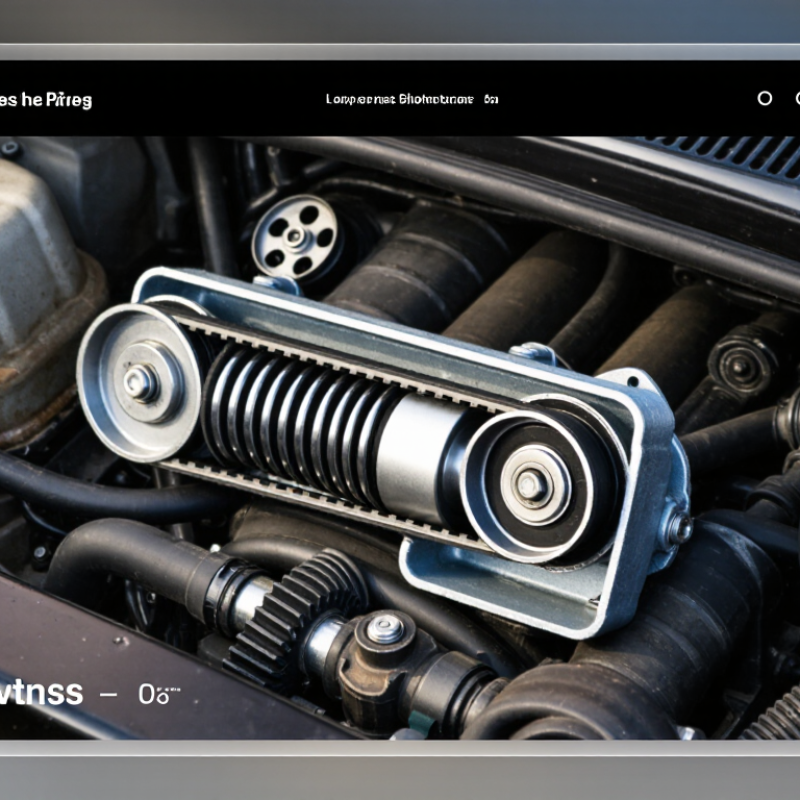
A Spring Tensioner is a compact mechanical device that maintains controlled tension in a belt, chain, cable, or moving assembly. Its spring stores energy and applies force when the system shifts. This helps reduce slack, vibration, belt slip, and premature wear. In an engine bay, the tensioner may sit beside a pulley, working through heat, dust, and constant rotation.
Mechanical engineer and spring-tensioning specialist Mark A. Johnson explains, “A tensioner is not simply a spring; it is a controlled force system that must respond without losing stability.” That distinction matters. A weak spring can allow movement and noise. An overly strong spring can increase bearing loads and accelerate component damage. The correct design balances tension, travel, material strength, and operating temperature.
Inside a typical Spring Tensioner, the spring pushes an arm or plunger against the moving part. As the belt stretches or the load changes, the arm moves to preserve contact. Some designs use coil springs, while others combine springs with hydraulic damping. The result should be steady force, not uncontrolled pressure.
It sounds straightforward.
Real systems are less forgiving. A small alignment error can create uneven wear across a pulley. A contaminated pivot may restrict movement. Even a correctly selected tensioner can fail when installation torque is ignored. This guide examines how Spring Tensioners work, where they are used, and which details deserve closer inspection. The explanation is practical, but it is not perfect; field conditions often reveal problems that laboratory testing misses.
Definition and Basic Purpose of a Spring Tensioner
A spring tensioner is a mechanical device that applies steady force to a belt, chain, cable, or moving linkage. Its basic purpose is to maintain correct tension during operation. A spring usually pushes or pulls an arm, while a pulley or guide transfers that force to the moving part. This helps prevent slipping, rattling, uneven movement, and premature wear.
The spring also compensates for small changes in length. Belts may stretch, chains may loosen, and vibration can briefly reduce tension. Instead of requiring constant manual adjustment, the tensioner moves within a controlled range. In practical maintenance work, correct tension is rarely about making a component extremely tight. Excessive force can overload bearings, shafts, and the spring itself. A tensioner is not a perfect fix for poor alignment or damaged parts.
Tips: Check the tensioner for noise, rust, restricted movement, or a visibly weak spring. The arm should move smoothly and return without hesitation. Compare its position with the equipment’s service specification. Never judge tension by feel alone, because a firm component may still be incorrectly adjusted. Recheck the system after a short operating period. Small changes can reveal problems that an initial inspection misses.
How a Spring Tensioner Maintains Proper Tension
A spring tensioner is a mechanical device that applies steady pressure to a belt, chain, cable, or moving assembly. Its spring stores energy and pushes an arm or roller against the working component. This pressure removes slack while allowing controlled movement. The tensioner also absorbs small changes caused by vibration, temperature, and normal wear.
In practical maintenance work, correct tension keeps a belt seated in its grooves and helps prevent slipping, noise, and uneven wear. When the belt stretches slightly, the spring-loaded arm moves to compensate. If the load suddenly changes, the arm can shift instead of forcing the belt to carry every shock. This protects connected parts. However, a spring tensioner is not a cure for every problem. A damaged spring, seized pivot, or worn roller may create false confidence. That assumption can be costly.
Tips: Check the tensioner with the equipment switched off and safely isolated. Look for rust, cracked arms, rough bearings, or a roller that wobbles. Compare the arm position with the manufacturer’s service specification when available. Never judge tension by appearance alone. A belt may look tight but still have incorrect force. Listen for brief squeals during startup, then inspect the system closely. In my experience, small alignment errors often appear before serious damage. Still, inspection methods vary, and a simple visual check can miss hidden spring fatigue. Record unusual noise, belt dust, and movement during service. Be cautious.
Common Types and Their Typical Applications
A spring tensioner maintains controlled force while parts move, stretch, or vibrate. It usually combines a spring, mounting point, and adjustable contact surface. As tension changes, the spring compresses, extends, or twists to keep pressure steady. This simple action helps prevent loose belts, rattling covers, cable slack, and uneven movement.
Common types suit different jobs. Compression spring tensioners push components together, so they appear in clamps, sliding guides, and light-duty assemblies. Extension spring tensioners pull parts apart and work well with cables, latches, and retractable mechanisms. Torsion spring tensioners rotate around a pivot. They are common in hinges, belt drives, and automatic adjustment arms. Constant-force spring tensioners provide nearly steady pull over longer travel. They can support covers, screens, and compact retracting systems. Actual performance depends on load, temperature, travel distance, and mounting alignment. A design may look correct but still fatigue early.
Tips: Measure the working range carefully. Check force at both ends. Inspect for coil rubbing, corrosion, or unusual noise. Do not select a spring by size alone. The wrong rate can overload bearings or leave a belt loose. One detail is easy to miss: vibration changes tension over time. In practical maintenance, a small alignment error often causes bigger trouble than expected. I would also recheck the first design after real-world testing, because calculated force rarely matches every operating condition.
Installation, Inspection, and Replacement Considerations
A spring tensioner keeps steady pressure on a belt, even when temperature and engine speed change. Its arm pivots against a spring, while the pulley guides the belt across the drive system. During installation, the belt must follow the correct routing diagram. A small routing error can create noise, edge wear, or sudden belt release.
Use a torque wrench on the mounting fastener. Follow the vehicle maker’s specification, not an estimated “tight enough” setting. Check pulley alignment with a straightedge. The pulley should rotate smoothly, without grinding, wobbling, or side-to-side movement. ISO 17359:2018 recommends condition monitoring through visible, audible, and measured changes. That supports checking for polished belt ribs, rust dust, spring weakness, and irregular movement during service.
Replace the tensioner when its spring action feels weak, the pivot binds, or the pulley bearing becomes noisy. Replace related worn belt components together when inspection shows shared damage. The U.S. Department of Energy reports that accessory-drive losses can reduce vehicle efficiency by several percent, so friction is not a minor concern. AAA’s 2023 vehicle-cost report estimated maintenance and repair at 9.83 cents per mile, although it does not isolate tensioner failures. That limitation matters. Real service intervals vary with dust, heat, oil exposure, and driving habits. A careful inspection is still better than trusting mileage alone.
What Is a Spring Tensioner and How Does It Work?
A spring tensioner maintains tension by converting spring extension into restoring force. This chart uses Hooke’s law, F = k × x, with a representative spring rate of 10 N/mm. Actual tensioner specifications vary by application and manufacturer.
Installation Install the tensioner in the correct direction and verify that the spring is seated properly before applying load.
Inspection Check for corrosion, cracks, permanent deformation, abnormal noise, and loss of tension during routine service.
Replacement Replace a damaged or weakened spring tensioner when it no longer maintains the required operating tension.