7 Tips for Choosing Injection Molding Inserts

Choosing injection molding inserts can determine whether a mold delivers stable parts or repeated production problems. The right insert supports dimensional accuracy, efficient cooling, clean ejection, and longer tool life. The wrong choice may create flash, wear, cracks, or difficult maintenance.

Small details matter. During a mold trial, a hardened steel insert may resist abrasion well, but it can also complicate machining and repairs. A copper-based alloy may remove heat quickly, yet it may not suit every resin or pressure level. These trade-offs deserve careful review. Material compatibility, insert hardness, surface treatment, tolerances, cooling layout, and expected production volume all influence performance.

Experience helps, but assumptions can still fail. A design that worked for one part may perform poorly with another resin, wall thickness, or cycle time. Even a trusted supplier should provide clear material data, dimensional records, and relevant testing evidence. Practical checks matter too. Inspect the insert after trial shots, examine wear near sharp corners, and compare actual cycle results with the original simulation.

There is no universally perfect insert. That is worth remembering. This guide presents seven practical tips for choosing injection molding inserts with greater confidence. It focuses on decisions that affect quality, maintenance, cost, and production reliability. The recommendations are useful for engineers, mold designers, purchasing teams, and manufacturers seeking repeatable results rather than attractive specifications alone.
7 Tips for Choosing Injection Molding Inserts

Understanding the Role of Injection Molding Inserts

7 Tips for Choosing Injection Molding Inserts

Understanding the Role of Injection Molding Inserts

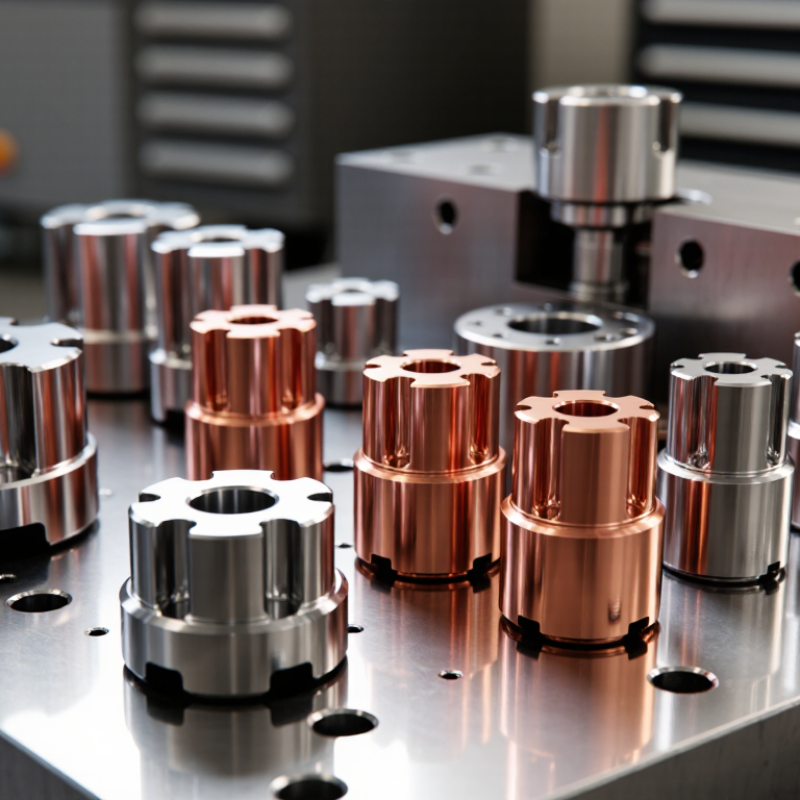
Injection molding inserts are more than replaceable mold parts. They shape critical details, control local wear, and influence cycle stability. A hardened steel insert can protect a high-use cavity area, while a copper-alloy insert may remove heat faster. The choice depends on geometry, resin, pressure, and expected volume.

PlasticsEurope reported 413.8 million tonnes of global plastics production in 2023. That scale increases demand for repeatable, repairable tooling. Grand View Research projects a 4.6% compound annual growth rate for the injection-molded plastics market through 2030. These figures make insert design less decorative and more operational. Engineers should check hardness, thermal conductivity, corrosion resistance, and machining tolerance before approving a material. Small details matter.

On a mold trial, a poorly fitted insert can leave a visible witness line near the gate. It may also create flashing after only a few hundred cycles. Keep the parting line simple. Allow enough clearance for thermal expansion, but avoid excessive movement. Cooling channels should stay close without weakening the insert wall. Replaceable inserts can shorten maintenance downtime and reduce the cost of correcting localized damage. Yet modularity can become a weakness. Too many joints complicate alignment, sealing, and cleaning. Measure the worn area, not just the damaged appearance. The first choice may be wrong. Review actual cycle data before repeating it.

Identifying Material and Performance Requirements

7 Tips for Choosing Injection Molding Inserts

Identifying material and performance requirements should guide every insert decision. Global plastics production reached 413.8 million tonnes in 2023, according to PlasticsEurope’s 2024 Plastics—The Fast Facts report. That volume reflects an expanding mix of engineering resins, filled polymers, and recycled materials. Each material can change wear, heat transfer, corrosion, and dimensional stability. Fit matters.

Check the resin temperature, pressure, shrinkage, and filler content before selecting an insert material. Glass-filled polymers can act like fine sandpaper against softer steel. Corrosive resins may attack unprotected tool surfaces. Hardened tool steel suits demanding production, while stainless grades help in humid or chemically aggressive environments. Copper alloys can shorten cooling cycles, but they may sacrifice wear resistance. Heat wins, sometimes. Do not assume the most expensive alloy performs best everywhere.

Define the expected cycle count, cavity pressure, part tolerance, and repair plan. The 2023 Global Injection Molding Machine Market report estimated the market at over 19 billion US dollars, showing the scale of modern molding operations. However, market growth does not guarantee correct insert selection. Review thermal conductivity data, hardness values, and supplier test methods. Verify them against actual production conditions. A polished surface may still fail when cooling channels create uneven temperatures. I would also question laboratory results that ignore abrasive fillers, cleaning chemicals, or repeated thermal shock. The insert must survive the real mold, not only the datasheet.

Selecting the Right Insert Design and Manufacturing Method

7 Tips for Choosing Injection Molding Inserts

Selecting the right insert begins with the part’s function, not its appearance. Examine the resin, molding temperature, pressure, cycle time, and expected production volume. A durable steel insert may suit high-volume work, while aluminum can reduce cost during development. Keep thermal expansion in mind. Poor material matching can create flash, distortion, or difficult ejection.

Design details matter just as much. Provide adequate draft, avoid sharp internal corners, and place parting lines where maintenance remains practical. Add cooling paths near thick sections, but protect them from leakage and distortion. Check insert walls carefully; thin areas may crack under repeated pressure. A clean CAD model can still hide a weak design. The first design is often wrong.

Manufacturing method should match tolerance and quantity. CNC machining works well for precise cavities and simple geometries. Wire cutting can produce narrow slots and accurate profiles. Electrical discharge machining helps create deep ribs, hard materials, and fine details, although it may require extra finishing. Consider polishing, coating, and replaceability before production begins. Measure critical dimensions after machining and again after trial molding. Small differences matter. Record wear, temperature changes, and ejection marks during testing. These observations provide stronger evidence than assumptions. Share drawings with the toolmaker early, because a minor geometry change may reduce machining time and future repair costs.

7 Tips for Choosing Injection Molding Inserts - Selecting the Right Insert Design and Manufacturing Method

Tip Key Selection Dimension Recommended Practice Useful Design or Process Guidance Typical Risk if Ignored
1 Match the insert material to the molding environment Select hardened tool steel for high wear, corrosion-resistant steel for chemically aggressive materials, and copper alloys where rapid heat transfer is the primary requirement. Common hardened tool-steel inserts are often used in the approximately 48–54 HRC range. Copper alloys conduct heat substantially better than steel but generally have lower wear resistance. Premature wear, corrosion, dimensional drift, or shortened mold life.
2 Define the insert geometry and parting strategy Use removable inserts for localized details, frequently repaired areas, interchangeable product variants, or features that are difficult to machine directly into the mold base. Provide positive locating features such as shoulders, keys, dowels, or tapered seats. Avoid relying on a single small fastener to resist molding pressure or side loading. Insert shifting, flash, mismatch at the parting line, and difficult maintenance.
3 Control draft, ejection, and removal access Add draft to molded surfaces and design the insert so it can be removed without damaging the cavity, part, or locating surfaces. A draft angle of about 0.5° to 2° is commonly used for many molded features, with the final value determined by texture, shrinkage, depth, and ejection requirements. Sticking, scuffing, deformation, excessive ejection force, or insert damage during service.
4 Evaluate the manufacturing method against feature complexity Use CNC machining for accessible prismatic features, EDM for narrow slots and deep ribs, wire EDM for accurate profiles, and metal additive manufacturing for complex internal cooling or conformal channels. EDM can produce hard-material details after heat treatment. Additive inserts require attention to build orientation, support removal, surface finishing, and post-build heat treatment. Unnecessary cost, long lead time, poor surface finish, or inaccessible internal features.
5 Design for thermal control and material shrinkage Check the insert’s thermal expansion, heat-transfer behavior, and effect on local cooling before finalizing the fit and surface dimensions. For initial cooling layouts, channel spacing is often considered in relation to channel diameter, commonly around 2–3 channel diameters from the cavity surface; validate the design with thermal analysis and molding trials. Sink marks, warpage, uneven cycle time, thermal cracking, or a mismatch between the insert and mold base.
6 Provide adequate venting and manage trapped gas Place vents near weld lines, end-of-fill areas, and other locations where air or decomposition gas may become trapped. For many thermoplastics, vent depths are commonly in the approximate range of 0.013–0.025 mm, but the correct value depends on resin viscosity, processing conditions, and flash sensitivity. Burn marks, short shots, weak weld lines, gas corrosion, and flash.
7 Plan for tolerances, inspection, and replacement Specify critical dimensions, datum references, surface finish, hardness, coating or treatment requirements, and a repeatable replacement procedure. Inspect critical insert-to-cavity interfaces with calibrated measurement equipment. Keep a controlled drawing and revision record so replacement inserts reproduce the original location and geometry. Part-to-part variation, difficult troubleshooting, extended downtime, and inconsistent replacement performance.

Checking Compatibility with Molds, Machines, and Production Conditions

7 Tips for Choosing Injection Molding Inserts

Checking compatibility starts with the mold, not the insert catalog. Confirm cavity dimensions, shutoff locations, draft angles, and cooling-channel clearance. Measure the actual mold, because drawings may be outdated. Check the insert’s thermal expansion against the mold steel. Small differences can create flash, cracks, or difficult ejection. Review hardness and wear resistance for the resin, especially when glass fiber or mineral fillers are present. PlasticsEurope reported 400.3 million tonnes of global plastics production in 2022, showing the scale of demanding, varied processing conditions.

Machine compatibility needs equal attention. Verify the injection unit’s shot size, clamp force, nozzle radius, and maximum mold temperature. Confirm that the insert can withstand injection pressure and repeated thermal cycling. Check alignment with the machine’s locating ring, ejector system, and hot-runner interface. Keep tolerances realistic. Overly tight fits may seize after heating. Loose fits may damage the parting line.

Production conditions often expose overlooked problems. Compare the insert material with melt temperature, cooling time, cleaning chemicals, and expected cycle count. Ask whether surface treatment remains stable under real production temperatures. Record trial results, including flash, warpage, ejection force, and temperature variation. One industry review may suggest strong performance, but your resin and machine can behave differently. A perfect selection is unlikely on the first attempt. Recheck the insert after several hundred cycles, when wear patterns become visible.

Evaluating Cost, Durability, Maintenance, and Quality Control

7 Tips for Choosing Injection Molding Inserts

Evaluating Cost, Durability, Maintenance, and Quality Control

Choose inserts by total cost, not purchase price. A cheaper insert may require frequent polishing, replacement, and machine downtime. Grand View Research forecasts the injection molding machine market will grow by nearly 5% annually through 2030. That growth increases pressure to protect uptime and repeatability.

Start with tool steel, hardness, thermal conductivity, and expected shot volume. Stainless alloys can resist corrosion in humid processes. Hardened steels often suit abrasive materials and long production runs. On production floors, small vent damage can create burn marks, short shots, or trapped gas. Check surface finish with a profilometer when appearance matters. Do not trust visual inspection alone.

Maintenance access deserves equal attention. Inserts should remove without disturbing alignment plates or cooling lines. Record polishing cycles, dimensional changes, and crack locations. Plastics Industry Association data reports that the United States plastics industry contributes more than 500 billion dollars annually. Even minor quality losses can become expensive at that scale.

Use replaceable wear inserts around gates, shutoffs, and sliding areas. Add inspection points for flash, burrs, and mismatch. A coordinate measuring machine can verify critical dimensions, while process capability data exposes drift. Still, capability studies can mislead when sampling is too small. Review several production runs, not one successful trial. That extra discipline often reveals maintenance problems before customers do.

7 Tips for Choosing Injection Molding Inserts

Evaluating Cost, Durability, Maintenance, and Quality Control

This engineering benchmark compares commonly used insert material categories on a five-point scale. Higher scores indicate better performance for the stated selection factor. Tool steel generally offers a balanced combination of cost, durability, maintenance, and quality consistency, while carbide provides excellent wear resistance at a higher cost and with more demanding machining requirements.

Ratings are generalized industry benchmarks; actual results depend on molding material, part geometry, production volume, cooling design, heat treatment, and required tolerances.