
China’s electric-vehicle boom makes dependable roadside charging more than a convenience. It is a practical test of the wider charging network. The International Energy Agency’s Global EV Outlook 2025 reports that global electric-car sales exceeded 17 million in 2024. China accounted for nearly 11 million sales, with electric cars making up almost half of new car sales. More vehicles mean more demand for help when a battery runs low, a route changes, or a fixed charger is unavailable.
The scale is striking. But sales figures do not prove emergency coverage is adequate. In the IEA’s Global EV Outlook 2023, Executive Director Fatih Birol said, “The growth in electric car markets is impressive, but it needs to be sustained and expanded.” His observation concerns the broader EV market, yet sustained growth depends partly on charging people can access when plans fail.
That is where an Emergency Ev Charger supplier earns scrutiny. Buyers should look beyond advertised power. They need evidence of charging performance, vehicle compatibility, response times, deployment options, and dependable after-sales support. A compact mobile unit beside a stranded car may matter more than a large specification sheet. Details count.
This guide examines leading Emergency Ev Charger suppliers in China and the capabilities behind their claims. It also leaves room for a less tidy truth: supplier rankings can change, and public information rarely reveals every field failure. Compare carefully. Trust verifiable records, not slogans.
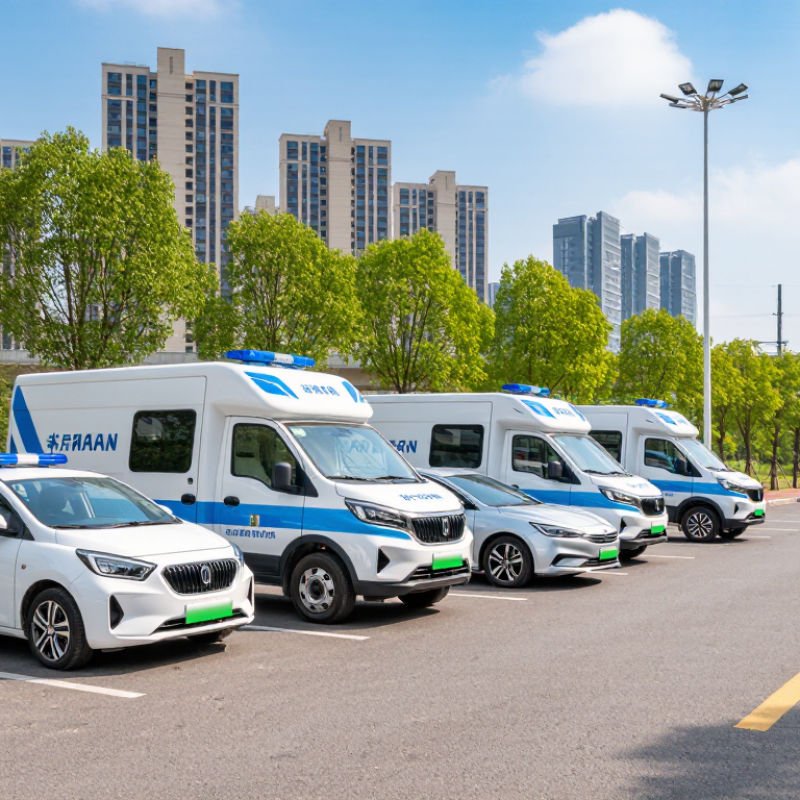
An emergency EV charger is a mobile charging solution used when an electric vehicle cannot reach a regular charging station. It may be carried by a roadside service vehicle or set up at a temporary location. Some systems draw power from an onboard battery; others connect to a suitable electrical supply. The exact setup varies. The goal is simple: add enough charge to help the driver reach a reliable charging point, not necessarily to fill the battery.
A typical call might involve a car stopped on a shoulder with only a few kilometres of range remaining. A technician checks the vehicle’s charging connection, confirms compatibility, and monitors the session. Safety matters: cables should stay clear of traffic, and equipment must be used within its rated limits. Charging speed and delivered energy depend on the vehicle, charger, and available power. It can take longer than expected.
Emergency charging is a useful backup, but it is not a substitute for planned charging or a full-service station. Drivers should ask what connector types and vehicle models a provider can support, and whether the service can reach their location. One detail is easy to overlook: a charger may provide only a modest energy boost. That limitation can be frustrating, yet setting realistic expectations helps drivers choose the next step calmly.
Emergency EV chargers provide temporary power when a vehicle needs a charge away from its usual charging location. They may be portable AC units or mobile DC charging equipment.
The chart shows representative power classes, not a supplier ranking or a survey of Chinese manufacturers. Actual output depends on the equipment, electrical connection, vehicle, and operating conditions. For context, at an assumed vehicle consumption of 18 kWh per 100 km and 90% charging efficiency, these power levels could add roughly 12–300 km of range per hour under ideal conditions; real-world range may be lower.
China’s emergency EV charging market is a service chain, not a single supplier category. Equipment makers provide mobile charging units, battery systems, and vehicle-mounted chargers. Integrators connect these tools with dispatch software and roadside assistance teams. Fleet operators and charging networks may also supply staff, parking access, and local coverage. The International Energy Agency’s Global EV Outlook 2024 reports that China had more than 70% of the world’s public charging points in 2023. That scale supports a dense ecosystem, but public chargers are not the same as emergency capacity.
In practice, a stranded driver may be served by a dispatch center, then a van carrying a compact charger to the roadside. Some cases need only enough energy to reach a nearby station. Others require towing or a longer mobile-charging session. The National Energy Administration reported 12.82 million charging facilities in China by the end of 2024, including public and private units. This broad infrastructure is a useful foundation, though it does not show how quickly emergency teams can reach a driver. That gap deserves more scrutiny.
Tips: Ask suppliers for verified response-time records, usable output, and service-area maps. Check how they handle bad weather and peak-hour calls. A large installed base alone proves little.
A leading emergency EV charger supplier is defined by more than rated power. In a roadside breakdown, crews need equipment that can be moved quickly, connected safely, and operated with clear instructions. A compact unit with wheels, protected connectors, and readable status indicators can save valuable minutes. Small details matter.
Technical fit is equally important. Suppliers should provide verified output ranges, supported vehicle connection types, charging limits, and clear operating conditions. Ask how the equipment performs in rain, dust, heat, and repeated transport. Request test records and maintenance guidance, not just a polished specification sheet. Field records help. A supplier that explains limitations plainly is often more dependable than one promising universal compatibility.
Service quality can separate a capable manufacturer from a market leader. Check response times, spare-part availability, training materials, and whether technical support can diagnose faults using practical information. For fleet operators, documented inspection routines and replacement procedures reduce uncertainty during urgent calls. Yet no product removes every delay: vehicle condition, battery temperature, and location can affect charging time. A careful supplier acknowledges these variables and helps customers plan realistic deployment, rather than presenting emergency charging as effortless.
The table below compares supplier categories and verifiable selection criteria, rather than presenting an unsupported company ranking. Actual performance depends on the specific charger model, vehicle, site, and service agreement.
| Supplier Category | Emergency Use Case | What Makes a Supplier Competitive | Evidence to Check | Key Limitation to Assess |
|---|---|---|---|---|
| Mobile DC charger manufacturers | On-site roadside assistance where a compatible power source is available. | A clearly specified DC output, vehicle-compatible connectors, straightforward deployment, and documented electrical and thermal protections. | Model datasheet; connector and communication compatibility; protection test records; operating-temperature and environmental ratings. | Output power alone does not establish charging speed; vehicle limits, battery conditions, and power-source capacity also matter. |
| Battery-buffered mobile charging suppliers | Short-distance or emergency charging at locations without a suitable grid connection at the vehicle. | Transparent usable-energy and output-power specifications, safe battery management, and a practical charging or replacement plan for the unit itself. | Usable energy in kWh; rated output in kW; recharge time under stated conditions; battery safety documentation; transport and operating instructions. | Available energy is finite. Confirm the expected service range and account for conversion losses and operating conditions. |
| Charging-system integrators | Deployments combining charger hardware, vehicle compatibility checks, software, and site or fleet operations. | Demonstrated interoperability, clear responsibility for commissioning and maintenance, and documented support for the intended vehicle models. | Compatibility matrix; commissioning records; service-level terms; escalation process; software and firmware update policy. | Compatibility should be verified for the complete charger–vehicle combination, not inferred from connector fit alone. |
| Roadside-assistance and fleet-service providers | Call-out charging for stranded drivers, commercial fleets, dealerships, or vehicle service networks. | Reliable dispatch, trained personnel, defined service coverage, and a process for determining whether charging or vehicle recovery is appropriate. | Coverage map; response-time commitment; technician training records; equipment inspection schedule; incident-handling procedure. | Response times and geographic coverage are service-contract terms; they should not be assumed from equipment specifications. |
| Multi-category suppliers | Programs requiring equipment supply plus integration, maintenance, or roadside support. | A documented product range, accountable end-to-end support, spare-parts availability, and consistent technical documentation. | Product and service scope; warranty terms; spare-parts policy; maintenance plan; named point of contact in the contract. | A broad portfolio is not proof of quality; evaluate the exact model and service package being offered. |
| Check | Relevant Reference or Data | Why It Matters |
|---|---|---|
| DC connector | GB/T 20234.3-2015 covers DC charging couplers used for conductive charging of electric vehicles. | Confirm the connector configuration and vehicle compatibility for the specific product and application. |
| Charger-to-vehicle communication | GB/T 27930-2015 specifies communication protocols between off-board conductive chargers and battery management systems. | Ask for evidence that the charger’s communication implementation supports the intended vehicle models. |
| Power and energy | Record rated output in kW and, for battery-buffered equipment, usable stored energy in kWh. | These are different measurements: kW describes power; kWh describes stored or delivered energy over time. |
| Service readiness | Check the written service area, response-time commitment, warranty, maintenance schedule, and support contact. | Emergency availability depends on the contracted service, not solely on the charger’s rated specifications. |
Selection note: Request current product documentation and test evidence for the exact model. Standards references and ratings should be checked against the applicable product version and local requirements.
China’s notable emergency EV charger suppliers generally fall into three groups: charging-equipment manufacturers, mobile charging-service operators, and firms combining hardware with roadside support. Their products may include battery-powered DC units, vehicle-mounted charging systems, and compact chargers for parking areas. The best fit depends on where a breakdown occurs and how quickly help can arrive. A useful feature list is not enough.
For equipment suppliers, check charging output, connector compatibility, battery capacity, and performance in cold or hot conditions. Ask for test documentation and clear service terms, rather than relying on brochure claims.
Mobile operators should explain their coverage area, dispatch process, and estimated arrival times. A charger may work well in a workshop but prove awkward on a narrow roadside shoulder.
China’s market includes suppliers with different levels of field experience, so avoid treating “top” as a verified ranking. Request a demonstration using the vehicle types you support. Watch how the unit is moved, connected, and monitored. Ask who handles faults after delivery. One detail is easy to miss: emergency equipment still needs regular inspection and trained users. Even then, response times can vary. That uncertainty deserves an honest conversation before purchase.
For roadside assistance, compare suppliers by the vehicles and conditions their chargers must handle. A unit for urban recovery may need fast setup and easy transport. Remote service teams may value a larger energy reserve and weather-resistant housing. Start with the job, not the catalogue. Check connector options, charging output, battery capacity, weight, and clear operating instructions.
Ask how performance changes in cold weather or after repeated use. Request test records that match the intended workload, not just peak-output figures. Small details matter. A cable that is awkward to stow can slow a roadside call. So can a display that is hard to read in bright sunlight. If possible, let technicians inspect a sample unit and rehearse a real deployment.
For fleet operators, compare delivery schedules, spare-part access, warranty terms, and service response times. For workshops, ask whether staff can diagnose common faults without specialized tools. Review the supplier’s quality-control process and request written answers about maintenance intervals. A polished specification sheet is useful, but it does not prove field reliability. I would also compare total operating cost, though estimates can be imperfect when repair frequency is unknown. A short pilot with several vehicle types may reveal gaps that a showroom demonstration misses.