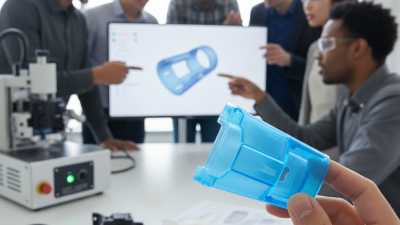
Medical injection moulding has become a critical manufacturing process for modern healthcare, supporting products from insulin pen components and diagnostic cartridges to surgical instruments. Demand is rising as medical devices become smaller, more precise, and increasingly disposable. Grand View Research estimates that the global medical injection molding market reached approximately USD 20.98 billion in 2023, with strong growth expected through 2030. MarketsandMarkets reports a similarly positive outlook, although market estimates differ because research firms use different definitions and regional data.
This variation deserves attention. A large revenue figure does not automatically indicate manufacturing excellence. The leading suppliers must combine validated tooling, controlled production environments, polymer expertise, and dependable quality systems. Their facilities may include cleanrooms, automated inspection stations, and documented traceability for every production batch. ISO 13485 certification is an important benchmark, but it should be reviewed alongside regulatory experience, process validation, and customer audit performance.
Details matter most.
This overview examines ten prominent medical injection moulding manufacturers worldwide. The selection considers production scale, technical capabilities, geographic coverage, medical-sector experience, and evidence of consistent quality. Reports from Grand View Research, MarketsandMarkets, and Fortune Business Insights help explain the sector’s commercial direction, while ISO standards and regulatory guidance provide a practical quality framework. Company rankings should not be treated as permanent or absolute. Supplier capabilities change, acquisitions occur, and public information may remain incomplete. Buyers should still conduct direct audits, verify certifications, and assess whether each manufacturer can meet the device’s risk class, material requirements, and delivery schedule. That caution is not a weakness. It is responsible sourcing.

Medical injection moulding is a controlled process for producing plastic components with heated polymers and precision tooling. It supports syringes, diagnostic housings, fluid-management parts, surgical handles, and laboratory consumables. Each component must match its drawing, material specification, and intended clinical use.
The scope extends beyond pressing plastic into a mould. Engineers assess resin selection, cavity pressure, cooling time, dimensional stability, and surface cleanliness.
A small flash on a connector can interrupt assembly. Excess moisture can weaken a transparent part. These details matter.
Very little is accidental.
Manufacturers commonly use validated processes, documented inspections, traceable batches, and controlled production areas. Quality systems aligned with ISO 13485 can support consistent records and risk-based decisions. Experienced teams also review mould wear, machine calibration, operator training, and packaging conditions. These checks connect manufacturing performance with patient safety.
Injection moulding also shapes the wider medical supply chain. It enables repeatable volumes, compact designs, and economical disposable products. However, speed should not replace judgement. A mould may produce thousands of identical parts while hiding a gradual dimensional shift. In practice, sampling plans and process monitoring need regular review.
The process is not flawless. Material changes, tool maintenance, and rushed approvals can create weak points. Reliable manufacturers acknowledge these limits and investigate deviations instead of simply correcting visible defects. That discipline gives medical moulding its real industry value: controlled, evidence-based production that remains open to improvement.
Ranking the top global medical injection moulding manufacturers requires more than comparing factory size or annual revenue. The strongest candidates show documented experience with drug-delivery components, diagnostic housings, surgical parts, or other regulated products. Their technical teams should understand polymer selection, shrinkage control, mould maintenance, and process validation. Practical experience matters when a tiny flash defect can affect assembly or patient safety.
Quality evidence carries greater weight than promotional claims. A credible manufacturer should operate an audited ISO 13485 quality system and controlled cleanrooms that match product risk. Reviewers should examine design-transfer records, material certificates, batch traceability, inspection methods, and corrective-action performance. Process capability data, such as stable critical dimensions across production runs, can reveal more than impressive equipment lists. Independent audits and customer references strengthen reliability.
Global ranking also depends on continuity. Assessors should compare tooling capacity, validated automation, production redundancy, delivery history, and communication across regions. Environmental controls and responsible waste handling deserve attention, but they should not replace product quality. No ranking is perfectly objective. Public information can be incomplete, and factory visits may show conditions that documents hide. A careful assessment should record uncertainty instead of forcing every manufacturer into a confident score. Small details matter. A cleanroom gowning step, a readable lot code, or a delayed deviation report may change the final position.
The top ten medical injection moulding manufacturers differ in scale, specialization, and technical depth. Several operate validated cleanrooms for syringes, diagnostic housings, and drug-delivery components. Others focus on precision moulds, multi-cavity production, or small parts measured in fractions of a millimeter. Their strongest profiles usually show controlled processes, documented training, and traceable material records.
Some manufacturers stand out through automated inspection, while others rely on experienced technicians for complex tooling adjustments. A few provide mould design, prototyping, and high-volume production under one quality system. Their facilities may include vision cameras, mould-temperature controls, and batch-level data collection. However, capacity claims can be difficult to compare. A large factory is not automatically the best fit. Supplier audits, sample reviews, and change-control records reveal more than polished presentations. Even reliable manufacturers may have weaknesses in communication or lead-time accuracy.
Tips: Check ISO 13485 certification, cleanroom classification, validation evidence, and regulatory experience. Request recent inspection data and ask how nonconforming parts are handled. Review surface finish, flash control, and dimensional consistency on real samples. A thoughtful buyer should also question assumptions, because an impressive process description may not match daily production. On-site evidence matters.
Top 10 Medical Injection Moulding Manufacturers Worldwide
Core capabilities separate leading medical injection moulding manufacturers from ordinary contract suppliers. Grand View Research forecasts roughly 6% annual market growth through 2030, increasing pressure on process stability and capacity.
The strongest manufacturers combine micro-moulding, insert moulding, overmoulding, and automated vision inspection. They commonly process medical-grade polypropylene, polycarbonate, PEEK, cyclic olefin polymer, and liquid silicone. Material selection depends on sterilisation exposure, chemical resistance, dimensional tolerance, and patient contact. Small parts demand exceptional control. A minor flash defect can disrupt assembly.
Cleanroom production is increasingly important for components used in fluid paths and diagnostic devices. ISO 13485 systems support traceability, while FDA process-validation guidance promotes documented process design, qualification, and continuous monitoring. Leading facilities therefore control resin drying, mould temperature, injection pressure, and cavity balance. They also record lot-level data. Useful, but not perfect.
Fortune Business Insights projects the medical injection moulding market to grow from approximately USD 24 billion in 2023 to more than USD 40 billion by 2032. This growth may encourage faster automation, yet speed should not replace validation. A polished surface can still hide internal stress. Some supplier comparisons remain difficult because companies report capacity differently. Buyers should inspect sampling plans, tool-maintenance records, material certificates, and change-control procedures before judging production strength.
| Rank | Anonymized Manufacturer | Primary Operating Region | Core Injection Moulding Technologies | Common Medical Materials | Cleanroom Production | Typical Product Scope | Quality and Regulatory Capability | Production Scale Indicators |
|---|---|---|---|---|---|---|---|---|
| 1 | Manufacturer 01 | North America and Europe | High-cavitation injection moulding, insert moulding, overmoulding, micro-moulding, automated assembly | PP, PE, PC, POM, ABS, TPE, silicone, PEEK | ISO 14644-controlled rooms, commonly ISO Class 7 and ISO Class 8 | Drug-delivery components, diagnostic consumables, surgical components, patient-care products | ISO 13485 quality-management systems, validation protocols, traceability, risk-management support | Large multi-site operations; presses typically ranging from micro-scale equipment to more than 500 tonnes |
| 2 | Manufacturer 02 | Western Europe | Precision moulding, two-shot moulding, liquid silicone rubber moulding, insert moulding | PP, PC, PBT, TPU, TPE, LSR, medical-grade silicone | ISO Class 7 cleanroom manufacturing and controlled assembly areas | Respiratory parts, fluid-management components, wearable-device housings, diagnostic plastics | ISO 13485, design-for-manufacturing support, process qualification, IQ/OQ/PQ documentation | Medium-to-large production footprint; automated cells and multi-cavity tooling for high-volume programs |
| 3 | Manufacturer 03 | East Asia and Southeast Asia | High-speed thin-wall moulding, stack moulding, insert moulding, precision tooling, robotic take-out | PP, PS, PE, PC, COP/COC, ABS, POM | ISO Class 7 and ISO Class 8 production environments | Syringe components, specimen containers, laboratory consumables, diagnostic cartridges | ISO 13485, statistical process control, automated inspection, lot-level material traceability | High-volume output with extensive automation; moulds commonly configured from 8 to 96 cavities |
| 4 | Manufacturer 04 | North America | Micro-injection moulding, precision moulding, insert moulding, moulded interconnect assemblies | PEEK, PEI, PPSU, PC, POM, nylon, medical-grade TPE | ISO Class 7 cleanrooms for controlled medical production | Minimally invasive-device components, catheter parts, surgical instruments, precision connectors | ISO 13485, process validation, dimensional metrology, material certification and change control | Specialist precision operation; equipment commonly supports shot sizes below 1 gram through medium moulding ranges |
| 5 | Manufacturer 05 | Central Europe | Multi-component moulding, gas-assisted moulding, insert moulding, automated part handling | PP, PC/ABS, PBT, PA, TPE, TPU, medical-grade elastomers | ISO Class 7 and ISO Class 8 cleanrooms, depending on product risk | Patient-monitoring housings, medical-device enclosures, handles, fluid-path components | ISO 13485, process capability studies, accelerated aging support, product and process audits | Broad press range from approximately 25 to 1,000 tonnes for small and large components |
| 6 | Manufacturer 06 | Scandinavia and Northern Europe | Precision moulding, cleanroom moulding, silicone moulding, automated visual inspection | PP, PE, PC, POM, LSR, TPU, TPE, bio-compatible engineering polymers | ISO Class 7 cleanrooms and controlled packaging areas | Laboratory consumables, inhaler components, fluid connectors, single-use medical assemblies | ISO 13485, environmental monitoring, electronic batch records, validated cleaning and packaging | Medium-scale specialist manufacturer with strong automation and short-run development capability |
| 7 | Manufacturer 07 | United Kingdom and Ireland | Toolmaking-led injection moulding, micro-moulding, insert moulding, prototype-to-production transfer | PP, PC, PEEK, PPSU, PEI, nylon, ABS, TPE | ISO Class 7 and ISO Class 8 controlled manufacturing areas | Orthopaedic components, surgical-device parts, diagnostic housings, laboratory equipment parts | ISO 13485, design transfer, gauge R&R, first-article inspection, full tool-maintenance records | Flexible capacity suited to development, validation batches and medium-volume production |
| 8 | Manufacturer 08 | Southeast Asia | High-speed moulding, thin-wall packaging moulding, insert moulding, automated assembly and packaging | PP, PE, PS, PET, PC, ABS, TPE and medical-grade elastomers | ISO Class 7 and ISO Class 8 rooms for medical and diagnostic products | Specimen cups, pipette components, diagnostic disposables, caps, trays and closures | ISO 13485, cleanroom monitoring, automated inspection, packaging validation and barcode traceability | High-volume production with multi-cavity tools and cycle-time optimization programs |
| 9 | Manufacturer 09 | Southern Europe | Medical-grade injection moulding, overmoulding, insert moulding, ultrasonic welding and assembly | PP, PE, PC, PVC, ABS, TPU, TPE and POM | ISO Class 8 production rooms with higher-grade zones for critical operations | Tubing connectors, wound-care components, diagnostic disposables, medical-device subassemblies | ISO 13485, supplier qualification, process validation, incoming inspection and nonconformance control | Small-to-large press capability, generally supporting both custom development and repeat production |
| 10 | Manufacturer 10 | Australia, New Zealand and Asia-Pacific | Precision injection moulding, overmoulding, rapid tooling, low-volume validation and automated assembly | PP, PC, PE, POM, PA, ABS, TPU, TPE and selected high-performance polymers | ISO Class 7 or ISO Class 8 controlled environments, based on application requirements | Diagnostic devices, laboratory plastics, surgical accessories, medical equipment housings | ISO 13485, design verification support, validation reports, process monitoring and batch traceability | Flexible regional capacity, covering prototypes, pilot production and medium-to-high volume programs |
Top 10 Medical Injection Moulding Manufacturers Worldwide
Quality Standards, Regulatory Compliance, and Market Reach
Selecting a top medical injection moulding manufacturer requires more than comparing prices. ISO Survey 2023 recorded more than 37,000 ISO 13485 certificates worldwide. That figure shows strong competition, but certification alone proves little. Buyers should examine process validation, cleanroom controls, resin traceability, and complaint handling. During audits, I would request mould maintenance records and batch-level inspection data. Small details matter.
Regulatory readiness should match the intended market. Manufacturers serving the United States need documented quality systems aligned with FDA requirements. European supply chains must address applicable Medical Device Regulation obligations. Grand View Research’s 2024 market analysis projects annual growth above 6% through 2030. This expansion increases pressure on capacity, documentation, and regional support. A factory may produce excellent parts, yet struggle with technical files or change-control discipline. That weakness deserves attention.
Tips: Ask for recent audit findings, not only certificates. Check whether validation covers cavity balance, particulate control, and ageing studies. Confirm backup tooling and local regulatory support before approving production. Market reach should mean dependable delivery, not a long customer list. No scorecard is perfect. A second technical review can expose assumptions that an impressive presentation hides.
Quality Standards, Regulatory Compliance, and Market Reach
This chart maps ten internationally recognized medical-device standards and regulatory references relevant to injection moulding suppliers. The year indicates the referenced edition, publication, or effective date and is intended as a compliance-landscape overview rather than a ranking of individual manufacturers.
References: ISO standards catalogue, European Union Medical Device Regulation (EU) 2017/745, and U.S. FDA Quality Management System Regulation, effective February 2, 2026.