Top 10 Injection Molding Materials for Your Next Project?
When considering the best materials for your next project, injection molding materials play a pivotal role. The global injection molding market was valued at over $15 billion in 2022 and is expected to grow significantly. In this competitive landscape, choosing the right material can affect both cost and quality. Industry experts like Dr. Emily Zhang emphasize, "The choice of injection molding materials can make or break product performance."
Many designers overlook essential aspects. Each material comes with unique properties. For example, thermoplastics are popular for their flexibility and low cost. However, metal injection molding may offer superior strength. Balancing cost and performance is crucial yet challenging.
Understanding the specific requirements of your project is vital. It can influence everything from design to fabrication. Some injection molding materials may not perform well under certain conditions. Consideration of environmental impact is also essential. The choices can lead to reflections on sustainable practices within the industry.

Overview of Injection Molding Materials
Injection molding is a popular manufacturing process due to its efficiency and versatility. The choice of materials can significantly impact the functionality and cost of the final product. Understanding the properties of various materials is essential for making informed decisions.
Common materials used in injection molding include thermoplastics and thermosets. Thermoplastics, like ABS and polycarbonate, are favored for their flexibility and durability. They can be easily reshaped when heated, allowing for recycling. On the other hand, thermosets, such as epoxy, offer excellent resistance to heat and chemicals but cannot be remolded once set. Each material type has its unique characteristics.
Choosing the right material can be challenging. For instance, while lightweight materials may reduce costs, they may not always meet strength requirements. Overlooking specific needs can result in failures during production or use. It is crucial to weigh the pros and cons of each material based on the project's goals and performance expectations. The right balance is often difficult to find, and miscalculations can lead to wasted resources. Reflecting on past choices can guide future projects towards better outcomes.
Key Properties to Consider in Injection Molding
When selecting materials for injection molding, understanding key properties is crucial. First, consider the material’s melting temperature. Plastics like ABS and polycarbonate have differing ranges. ABS melts at around 220°C, while polycarbonate’s range is around 260°C. This impacts the molding process directly. Higher melting temperatures mean longer cycle times and more energy input.
Additionally, tensile strength is a significant factor. Materials with high tensile strength, like nylon, can withstand more stress during use. Reports indicate that nylon can have a tensile strength of up to 80 MPa. However, more strength often comes at the cost of flexibility, which can be a drawback for some applications.
Another critical property is chemical resistance. Some materials resist solvents better than others. For example, polypropylene is commonly used in environments with exposure to various chemicals. However, its durability can be less in high-stress applications. Evaluating these trade-offs is essential for achieving optimal results in your project. Balancing properties like strength, flexibility, and chemical resistance complicates the selection process but is vital for project success.
Top 10 Materials Used in Injection Molding Applications
When selecting materials for injection molding, it's essential to know your options. Various plastics are used in this process. Here are ten popular choices.
Polypropylene is light and resistant to chemicals. It is often used for packaging and automotive parts. ABS is known for its durability and impact resistance, making it ideal for toys and housings. Polyethylene offers excellent flexibility and is widely used for containers and lids.
Consider this: the right choice can save time and reduce waste. Test small samples before full production. This helps ensure the material meets your project needs.
Polycarbonate provides high strength and is often used in safety glasses. Nylon is strong and resistant to wear, making it suitable for mechanical components. Acrylic is transparent and can mimic glass, but it may scratch easily.
Remember, not all materials are suitable for every project. Budget constraints may affect your material choice. Weigh the pros and cons carefully before making a decision. Certain materials may also require special processing. That could lead to extra costs.
Top 10 Injection Molding Materials for Your Next Project
Comparative Analysis of Material Performance
When selecting materials for injection molding, understanding performance is crucial.
Polypropylene (PP) is known for its versatility and low production costs.
It maintains decent tensile strength while being lightweight. According to the Polymer Science Journal, its impact resistance ranges from
4.0 to 40.0 kJ/m², making it ideal for packaging.
A comparative study shows how acrylonitrile butadiene styrene (ABS) excels in mechanical properties.
ABS offers excellent hardness and can withstand temperatures up to 80°C.
Its tensile strength is often cited at around 30 MPa. However, it tends to be less resistant to UV light, leading to
color fading without additives. This high dependency on protective coatings can complicate projects.
Thermoplastic elastomers (TPE) present another intriguing option. With superior elasticity and flexibility, their durometer
rating can range widely. A report from the American Plastics Council highlights that TPEs perform well in dynamic applications but may require careful formulation
to achieve optimal properties. Balancing flexibility and durability remains a challenge in material selection.
Future Trends in Injection Molding Materials Selection
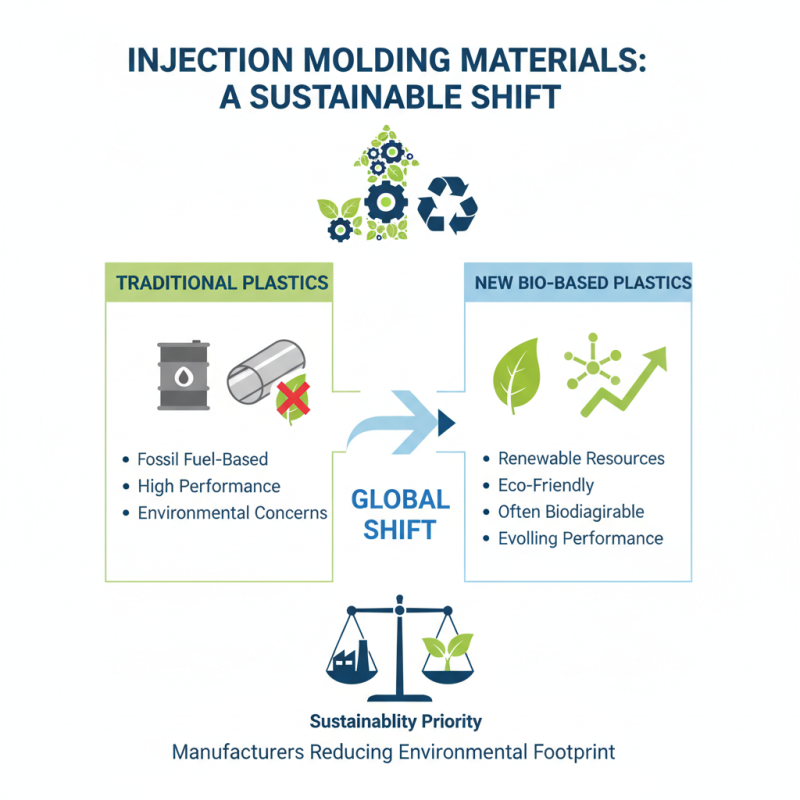
The selection of injection molding materials is evolving rapidly. Manufacturers are now prioritizing sustainability. Bio-based plastics are gaining traction, reducing reliance on fossil fuels. These materials are eco-friendly and often biodegradable. They appeal to companies aiming to minimize their environmental footprint. However, they may not always perform at the same level as traditional plastics.
Another notable trend is the shift toward high-performance materials. Engineers seek alternatives that can withstand extreme conditions. Materials such as advanced composites offer enhanced durability. These options can also add complexity to the production process. Considerations for cost and feasibility are crucial. Limited knowledge and testing may lead to unexpected challenges.
Emerging technologies also play a role. Innovations in material science are creating new possibilities. 3D printing is influencing injection molding techniques. This fusion is enabling more complex designs. Yet, many companies remain hesitant to adopt these changes. The pace of innovation can be daunting. Staying updated requires continuous learning and awareness. Balancing performance, cost, and sustainability is not easy. However, this struggle may lead to invaluable insights and improvements in future projects.