Choosing a mold plastic injection manufacturer in 2026 takes more than comparing quoted prices. A low estimate can hide long tooling lead times, limited engineering support, or unclear quality controls. This guide examines manufacturers through practical criteria: mold-design capability, process consistency, material experience, production capacity, and communication. The right partner should explain how a part will be molded, not simply promise a fast launch.
John Bozzelli, a recognized scientific-molding educator, is associated with a useful principle: “The process is the product.” That idea matters when evaluating suppliers. A polished sample is encouraging, but stable parts across repeated production runs matter more. Ask how a company monitors cycle conditions, handles dimensional checks, and responds when a tool needs adjustment. Look for specific answers, not just impressive equipment photos.
Details reveal a lot. A supplier that can discuss resin drying, gate placement, and realistic tolerances is often better prepared for demanding work. Still, no ranking fits every buyer. A medical component, an automotive clip, and a clear consumer-product housing can require very different expertise. This overview compares leading manufacturers and explains where each may fit, while noting that capabilities vary by facility and project. Some company information is difficult to compare directly; that is worth keeping in mind. Manufacturers should be verified against current certifications, references, and sample parts before a final decision.
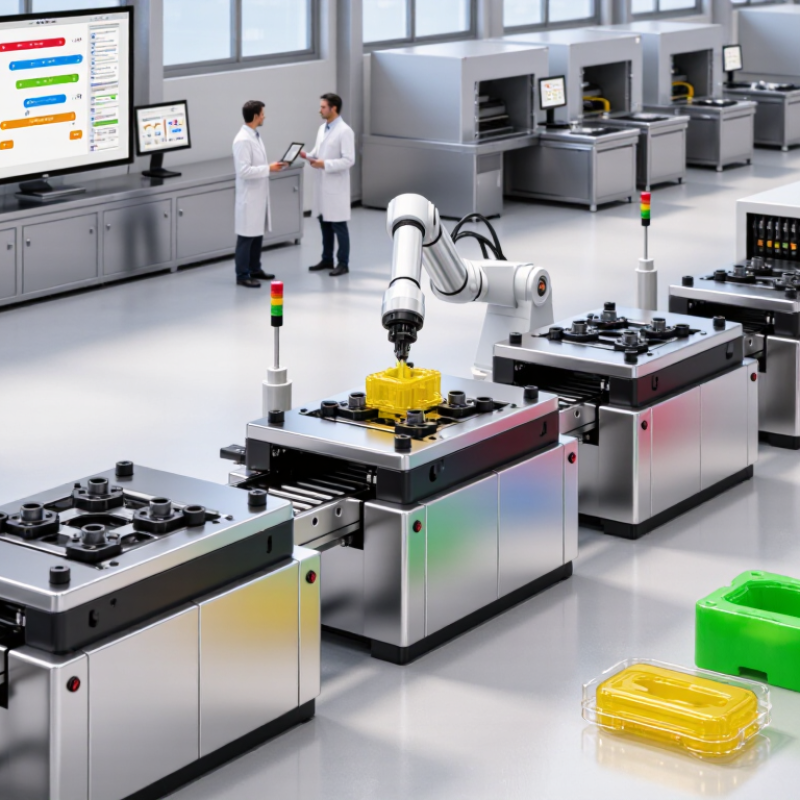
Mold and plastic injection manufacturers turn part drawings into repeatable molded components. Their work often begins with design-for-manufacturing reviews: checking wall thickness, draft angles, gates, and likely shrinkage before cutting steel. They then build or source the mold, select a resin, and set parameters such as melt temperature, injection pressure, and cooling time. Small choices matter. A poorly placed gate can leave a visible weld line; uneven cooling can warp a flat panel. Manufacturers also run sample shots, inspect dimensions, and adjust tooling before production. Some parts need trimming, assembly, or surface finishing afterward.
The scale is substantial. Plastics Europe’s Plastics – the Fast Facts 2024 report estimates global plastics production at 413.8 million tonnes in 2023. Grand View Research’s injection-molded plastics market report estimates the market at $347.7 billion that year, with projected growth through 2030. These figures describe a broad industry, not the output of any single factory. In practice, manufacturers coordinate material traceability, machine settings, mold maintenance, and inspection records to keep parts consistent across production runs. A capable supplier should explain how it controls those variables and provide measurable acceptance criteria. Yet design reviews can miss real-world handling or assembly problems; prototypes and production trials are not perfect substitutes for learning from use.
In 2026, evaluating an injection molding manufacturer means examining how consistently it controls the full process, not just the quoted part price. PlasticsEurope reported 413.8 million tonnes of global plastics production in 2023, underscoring the scale of material use and the importance of dependable resin handling. Ask how a supplier verifies incoming resin, documents drying conditions, and tracks material lots. On a sample part, inspect the gate, weld lines, flash, and critical dimensions. Small defects can reveal larger process-control gaps.
Manufacturing data should support, not replace, practical evidence. Deloitte’s 2024 Smart Manufacturing Survey found that 92% of surveyed manufacturing executives viewed smart manufacturing as a key competitiveness driver over the following three years. For molders, useful evidence includes recorded process settings, dimensional inspection results, maintenance logs, and clear corrective-action records. Request a mold trial report and ask how the supplier responds when a cavity drifts out of tolerance. Numbers are not enough. A clean dashboard may hide inconsistent measurement methods, and even experienced buyers can miss that. Compare suppliers using the same part requirements, material specification, and inspection plan; otherwise, the evaluation can look precise while remaining unfair.
Profiles of leading mold and plastic injection manufacturers should begin with capability, not factory size. Grand View Research valued the global injection-molded plastics market at USD 284.3 billion in 2023. Its report projects a 4.8% compound annual growth rate through 2030. Demand is broad.
One manufacturer profile may center on in-house mold design and precision tooling. Look for documented mold-flow analysis, steel selection, dimensional inspection, and preventive maintenance. Another may specialize in high-volume molding, with automated handling and stable cycle times. A third may focus on complex, lower-volume parts, where quick changeovers and careful process control matter more. Details count. PlasticsEurope’s Plastics—The Fast Facts 2024 report puts global plastics production at 413.8 million tonnes in 2023. That scale makes material traceability and scrap tracking useful comparison points, not minor extras.
For a practical shortlist, compare sample-part consistency, tool repair response, and transparent reporting of defects. Ask how suppliers validate a new mold, manage resin changes, and protect tight tolerances across production runs. A glossy capability sheet is not proof. Audits and trial runs provide better evidence, though even these cannot guarantee perfect output. Real operations can be messy. A fair profile should note both strengths and gaps, including whether quoted lead times rely on available machine capacity.
Regional strengths shape the search for mold plastic injection manufacturers in 2026, but location alone cannot predict quality. East Asian suppliers often offer broad tooling capacity, established component networks, and competitive lead times. These strengths can help with complex molds and larger production runs. Still, timelines depend on design changes, material availability, and clear communication.
Central European manufacturers are often associated with precision engineering and detailed process documentation. Their expertise can suit tight tolerances, intricate inserts, and demanding surface finishes. North American suppliers may offer closer collaboration for local projects, especially when teams need frequent design reviews or short production runs. Regional labels are rough guides, not guarantees. Details matter.
Across all regions, buyers should examine evidence, not just sales claims. Ask how a supplier controls mold temperature, checks part dimensions, and handles resin trials. A sample part can reveal warpage or visible sink marks that a polished presentation may hide. Compare tooling plans, inspection records, and communication practices on the same basis. Even a capable factory may struggle when drawings are incomplete. That point is easy to overlook. A careful review of technical fit, capacity, and follow-up support gives a more useful comparison than a simple regional ranking.
Comparison guide: This table summarizes common regional capabilities and market tendencies. It is not a company ranking; capabilities vary by supplier, country, and project requirements.
| Manufacturing Region | Common Regional Strengths | Typical Industry Specialties | Common Capabilities | Sourcing Considerations |
|---|---|---|---|---|
| China | Broad supplier networks support mold design, tooling, molding, and secondary operations, with options across a wide range of production volumes. | Consumer products, electronics, household goods, automotive components, and packaging. | Injection mold fabrication, multi-cavity tooling, insert molding, overmolding, surface finishing, and assembly. | Confirm tooling ownership, material traceability, quality documentation, sample approval procedures, and shipping timelines. |
| Japan and South Korea | Known for precision-oriented manufacturing, process control, and experience producing consistent parts for demanding applications. | Automotive, electronics, precision components, appliances, and selected medical products. | High-precision tooling, tight process monitoring, insert molding, engineering plastics processing, and automated production. | Review dimensional inspection plans, validation requirements, engineering-change procedures, and production capacity for the required volume. |
| Germany and Central Europe | Strong engineering and industrial manufacturing base, with close links between tooling, automation, and production engineering. | Automotive, industrial equipment, electrical products, and regulated or technically demanding applications. | Complex mold design, automation integration, engineering-grade resin processing, and production process documentation. | Assess total landed cost, project lead time, applicable quality-system requirements, and the supplier’s ability to support ongoing mold maintenance. |
| North America | Regional production can support close collaboration, shorter supply routes for local customers, and responsive tooling or production support. | Automotive, medical products, packaging, consumer goods, and industrial components. | Custom mold building, injection molding, insert molding, secondary operations, assembly, and production support. | Clarify whether tooling and production are domestic or cross-border, and verify regulatory, traceability, and quality requirements for the end market. |
| Southeast Asia | A varied manufacturing base with established export production in several countries and growing capabilities in plastics and electronics supply chains. | Electronics, consumer goods, automotive components, packaging, and household products. | Injection molding, mold maintenance, assembly, and other export-oriented manufacturing services; capabilities differ substantially by country and supplier. | Evaluate technical capacity, resin sourcing, quality controls, logistics routes, and continuity plans at the individual supplier level. |
Choosing a mold plastic injection manufacturer in 2026 takes more than comparing unit prices. Share your part drawings, expected order volume, resin requirements, and critical dimensions. A capable supplier should explain how draft angles, wall thickness, and gate placement affect cost and part quality. Ask who reviews the design and what happens when a mold needs adjustment. Clear answers matter.
Request a sample plan, inspection criteria, and a realistic production schedule. Check whether the quote includes mold trials, routine maintenance, and replacement components. Ask to see inspection records or examples of similar work, while protecting confidential design details. A low quote can be good value, but it may exclude important services. That matters.
Tips: Send the same files and specifications to every candidate. Ask for a written breakdown of tooling, sampling, and production costs. Compare a sample against measurable requirements, not appearance alone. If the supplier avoids discussing risks, pause. I would not assume a polished presentation guarantees smooth production; communication can still falter once revisions begin. Keep decisions and approvals documented.
A manufacturer’s experience with your resin matters for mold design and dimensional accuracy. These representative shrinkage ranges can help guide early discussions.
How to use this chart: Ask prospective manufacturers how they account for resin shrinkage when designing tooling and controlling part dimensions. Values are indicative; actual shrinkage varies by resin grade, fillers, part geometry, and processing conditions. Confirm against the selected material’s datasheet.