Selecting a reliable supplier of plastic extrusion profiles takes more than comparing catalogues. A profile may look simple on a drawing, yet small changes in wall thickness, corner radius, or cooling can affect fit and performance. Buyers should examine material options, tooling capability, dimensional control, production capacity, and support for custom designs. Details matter.
Chris Rauwendaal, an experienced extrusion engineer and author of Polymer Extrusion, has written extensively about the process and its interacting variables. His work supports an important lesson: profile quality depends on controlling the process as a whole, not just choosing a die. A verified verbatim quotation from him was not included in the supplied material, so I will not invent one. That restraint matters in a manufacturer comparison.
This guide examines how to assess manufacturers across product range, engineering support, quality practices, and delivery reliability. It also considers practical signs buyers can check, such as sample consistency, clear tolerances, and communication during tooling trials. A polished website is not enough. Ask how a supplier handles design changes, material selection, and production issues. Compare evidence, not promises. The strongest shortlist will reflect the application: a window frame, a protective edge, and a flexible seal each demand different profile characteristics. Some details may still require direct confirmation with the manufacturer. That is part of careful sourcing.
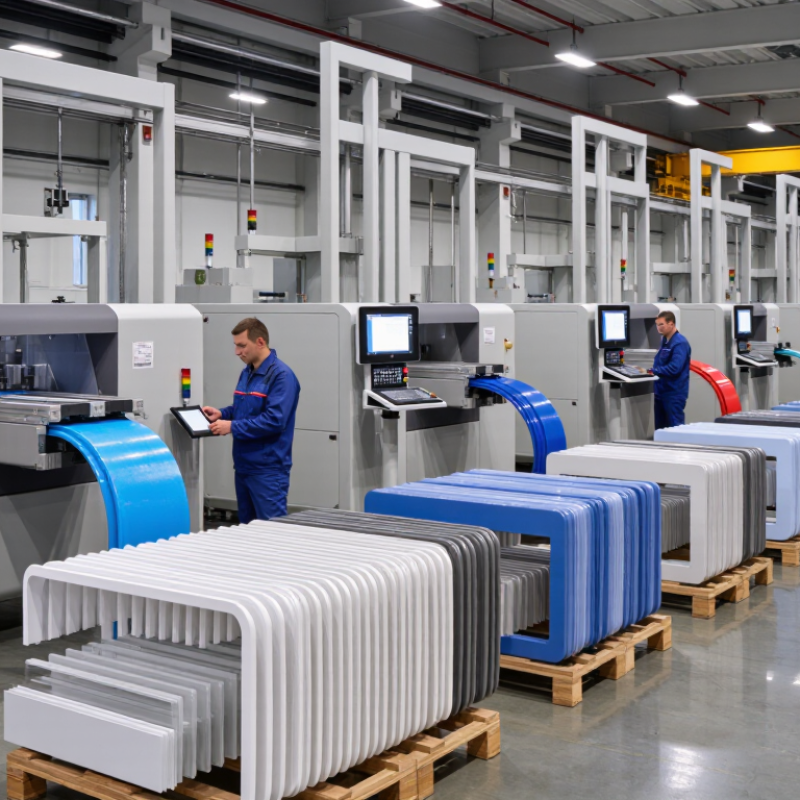
Plastic extrusion profiles are shaped plastic components made with a continuous process. Heated polymer passes through a custom die, forming a consistent cross-section. The emerging shape is cooled, checked, and cut to length. Simple in principle. Precise in practice. A small change in die temperature or cooling speed can affect dimensions and surface quality.
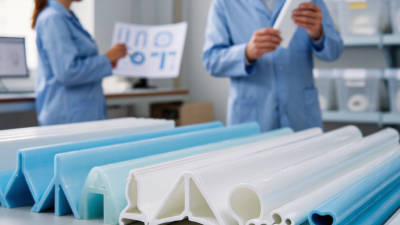
Profiles come in many forms, including window channels, edge trims, protective covers, seals, and cable guides. Their shape may include grooves, hollow chambers, flexible lips, or interlocking edges. Materials such as PVC, ABS, polyethylene, and thermoplastic elastomers suit different needs. For example, a firm frame section needs stiffness, while a flexible sealing strip must bend without cracking. The right choice depends on exposure, load, temperature, and contact with other parts.
When evaluating a manufacturer in China, ask how it controls dimensions across long production runs. Request a sample with the actual cross-section, not just a product photo. Check corner definition, wall thickness, color consistency, and whether the profile fits its mating part. Tooling design matters, too. A poorly designed die can leave uneven walls or visible lines. These details are easy to overlook on a screen. They become obvious during assembly. Manufacturers may provide inspection records or material data, but confirm what each document covers. A sample is useful, though it cannot reveal every production variation.
China’s plastic profile industry is not one uniform factory system. It is a connected network of resin suppliers, compounders, tooling workshops, extrusion plants, and finishing services. Some manufacturers buy ready-made compounds; others adjust formulations for stiffness, color, weather exposure, or indoor use. That distinction matters. It affects lead times, consistency, and who can troubleshoot a production issue.
Many factories focus on particular profiles, such as window sections, cable channels, trim, or custom industrial shapes. Nearby mold makers can shorten tool revisions, while cutting, drilling, and packaging teams prepare profiles for shipment. In practice, capabilities vary widely. A supplier’s catalog may look broad, but its strongest results often come from a narrower set of dies and materials. Buyers should check sample dimensions, wall thickness, surface finish, and batch records—not just a machine list. Small details count.
Quality control may include dimensional checks, visual inspection, and tests suited to the intended application. Yet testing practices are not identical across suppliers, and a polished sample cannot prove stable output over time. Requesting a trial run and agreeing on inspection points can reveal problems early. The industry is efficient in many places, but not magically consistent. That is worth remembering.
Assessing Chinese plastic extrusion profile manufacturers takes more than comparing quoted prices.
PlasticsEurope’s Plastics—The Fast Facts 2024 reports global plastics production of 413.8 million tonnes in 2023, with China accounting for 33.3%.
That scale makes supplier screening important, but volume alone proves little. Request resin-grade documents, batch traceability, and dimensional inspection records. Check a two-meter profile for bowing, wall thickness, color variation, and fit after cooling—not only while it is warm. Samples are not enough.
Review tooling practices and change-control procedures. Ask for drawings with tolerance bands, first-article inspection reports, and calibration records. ISO 9001 certification indicates a documented quality system; it does not guarantee that a profile will suit your application. Where relevant, ask how the factory tests impact resistance, UV exposure, or thermal cycling. For export orders, check whether packaging protects corners from crushing during transit. A factory visit can reveal production details that paperwork misses: observe a live run, inspect scrap handling, and compare packed goods with approved samples. I would still treat one successful trial as limited evidence. Repeat orders may reveal dimensional drift, and suppliers do not always volunteer bad news.
Chinese plastic extrusion profile suppliers serve far more than the window and door trade. Construction buyers use PVC and composite profiles for frames, cable trunking, drainage channels, and wall trims. The International Energy Agency’s Tracking Buildings 2023 report estimates that buildings consume about 30% of global final energy. This makes thermal breaks and airtight seals important, although a profile alone cannot ensure a building performs well. Details matter.
Automotive factories source extruded seals, edge guards, interior channels, and protective covers. China’s National Bureau of Statistics recorded 30.16 million vehicles produced in 2023, a measure of the sector’s scale rather than a direct count of profile demand. Electrical and appliance manufacturers also use profiles as wire guides, gasket carriers, and sliding rails. Fit matters. Even small variations in wall thickness can complicate assembly.
Other applications include greenhouse glazing bars, irrigation channels, cold-storage door seals, and warehouse protection strips. Suppliers may offer rigid or flexible compounds, co-extrusion, custom die development, and cut-to-length production. The International Energy Agency reported nearly 14 million electric cars sold worldwide in 2023; this signals changing vehicle markets, but does not prove a matching rise in extruded-profile orders. Buyers should verify material consistency, dimensional tolerances, and test conditions against their own use. Supplier capabilities vary, and published specifications do not always reflect production batches.
Chinese plastic profile extruders serve a broad range of industries. The examples below describe common applications and material options; actual capabilities, grades, tolerances, and certifications vary by supplier and project.
| Industry | Typical Extruded Products | Common Applications | Typical Materials | Key Selection Considerations |
|---|---|---|---|---|
| Construction and building products | Window and door profiles, glazing beads, decorative trims, cable trunking, seals | Window and door assemblies, interior finishing, weather sealing, cable routing | PVC, PE, PP, TPE | Outdoor weathering, UV exposure, dimensional stability, color consistency, and applicable building requirements |
| Automotive and transportation | Edge trims, glazing seals, protective conduits, interior finishing profiles | Vehicle doors and windows, trim protection, wire and component routing | PVC, TPE, PP, ABS | Temperature range, abrasion resistance, fit, flexibility, and compliance with the vehicle buyer’s specifications |
| Electrical and electronics | Cable ducts, wire-protection profiles, insulating covers, diffuser channels | Cable management, equipment enclosures, and lighting assemblies | PVC, PE, PP, PC, PMMA | Electrical and fire-performance requirements, impact resistance, transparency, and heat exposure, as specified for the application |
| Furniture and interior products | Edge trims, decorative strips, wardrobe tracks, drawer and sliding-system components | Cabinetry, shelving, office furniture, and interior fit-outs | PVC, ABS, PP, TPE | Surface finish, color matching, scratch resistance, profile fit, and resistance to routine cleaning products |
| Home appliances | Door gaskets, appliance trim, protective rails, air-guiding profiles | Refrigerators, washing machines, air-conditioning equipment, and other household appliances | PVC, TPE, PP, ABS | Seal performance, repeated-use durability, temperature exposure, and compatibility with adjacent components |
| Retail, signage, and displays | Sign holders, shelf-edge strips, display channels, transparent covers | Point-of-sale displays, retail shelving, light panels, and information holders | PMMA, PC, PVC, ABS | Optical clarity, surface quality, color, impact resistance, and indoor or outdoor exposure |
| Agriculture and horticulture | Greenhouse glazing bars, mounting channels, protective and irrigation-related components | Greenhouse construction, crop-protection structures, and agricultural installations | PVC, PE, PP, PC | UV and moisture exposure, outdoor service life, impact resistance, and compatibility with the installation system |
| Industrial equipment and machinery | Machine guards, conveyor guides, wear strips, protective covers, seals | Production lines, material handling, equipment enclosures, and component protection | PE, PP, PVC, ABS, PC, TPE | Load and wear conditions, chemical exposure, operating temperature, profile tolerances, and ease of installation |
Material names are general examples, not product specifications. Confirm resin grade, additives, testing, tolerances, and regulatory requirements with the supplier for each intended use.
When comparing China plastic extrusion profiles manufacturers, begin with the drawing, not the sales brochure. Confirm dimensions, tolerances, material grade, color, and expected exposure to sunlight or moisture. Ask how the factory controls wall thickness and straightness during production. A profile that looks clean on a sample may vary across a full run. Check several pieces, including different lengths, and measure critical points with calipers.
Verify capability with specific evidence. Request material data sheets, inspection records, and a clear explanation of how production batches are identified. Ask whether the supplier can provide samples made with the proposed tooling and material. Review tooling ownership, lead times, minimum quantities, and packaging details. If possible, inspect the production area or arrange a video walkthrough. Compare quotations line by line; a low unit price may exclude setup, testing, or protective packing. I may be over-weighting documentation here, but vague answers are worth a second look.
Tips: Send the same drawing and questions to each candidate. Keep written replies, test samples under realistic conditions, and place a small trial order before committing to larger volumes. Check for scratches, color shifts, and fit after assembly.