How to Choose the Right Injection Molding Materials for Your Project?
Choosing the right injection molding materials is crucial for any manufacturing project. The right materials impact not only the product's performance but also its cost and durability. Understanding the options available can be overwhelming due to the variety of injection molding materials on the market.
Different applications require different characteristics. For instance, some projects need materials that can withstand high temperatures, while others require flexibility or strength. Each choice affects the final product significantly. It's essential to evaluate your project’s specifications and demands carefully.
However, selecting the perfect material is not always straightforward. Experience shows that many projects face issues due to material misselection. Reflecting on past projects can provide valuable insights. Always weigh the pros and cons of each injection molding material. This careful consideration will lead to better outcomes and increased reliability in production.
Understanding the Basics of Injection Molding Materials
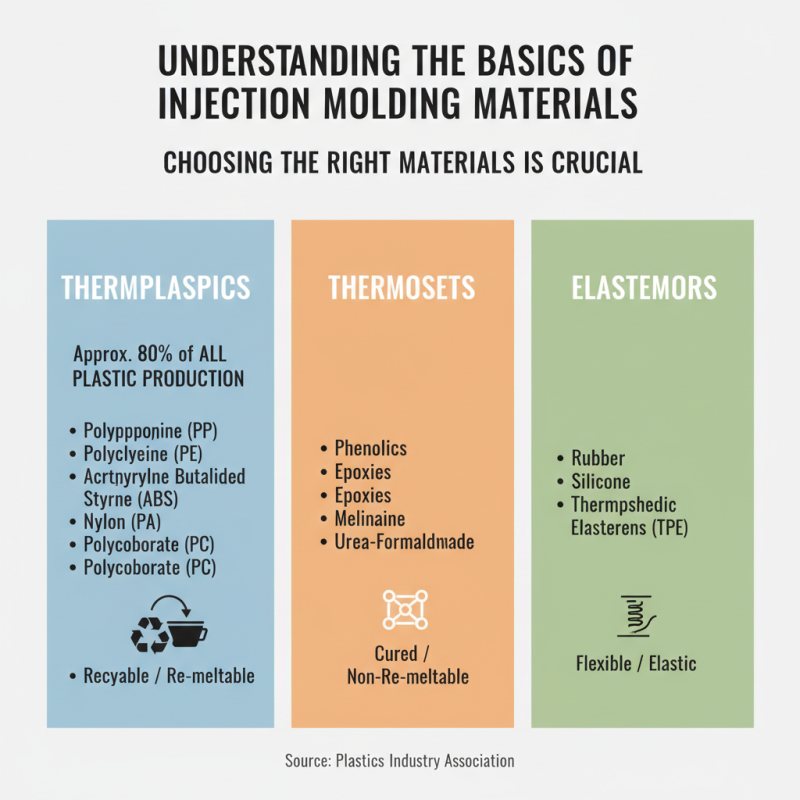
Choosing the right injection molding materials is crucial for project success. Understanding injection molding materials starts with recognizing the diverse options available. Thermoplastics, thermosets, and elastomers dominate the market, with thermoplastics making up about 80% of the total plastic production, according to the Plastics Industry Association.
Thermoplastics, such as polypropylene and polycarbonate, are versatile. They offer flexibility and can be easily reshaped. On the other hand, thermosets provide strong structural integrity, ideal for high-heat applications. Yet, the process of choosing can be challenging. Factors like melting temperature, tensile strength, and resistance to chemicals should influence your decision. Research shows that improper material selection can result in high rejection rates, sometimes reaching 10% in critical industries.
Design requirements also play a significant role. Considerations like wall thickness and part geometry impact the choice of material. For instance, in a recent study by the American Society of Mechanical Engineers, 30% of engineers reported complications in processing due to inadequate material characteristics. Those issues can lead to increased costs and project delays. It's essential to collaborate with experts and review performance data to inform your choices, ensuring that the selected materials align with your project's goals.
Factors to Consider When Selecting Injection Molding Materials
Selecting the right injection molding materials is crucial for project success. There are several factors to consider. First, the mechanical properties of the material need attention. Tensile strength, impact resistance, and elasticity are essential traits for ensuring durability. According to a 2022 report by the Plastics Industry Association, over 65% of product failures stem from poor material choices.
Thermal properties also play a significant role. Materials must endure various temperatures during processing and in end-use environments. A study published in the Journal of Materials Science indicates that more than 30% of injection-molded parts fail due to inadequate thermal stability. Evaluating the processing temperature and heat resistance is vital.
Lastly, cost efficiency cannot be overlooked. Materials that seem cost-effective initially may not hold up under performance tests. A 2021 market analysis revealed that nearly 25% of manufacturers faced increased costs due to material-related failures post-production. Balancing initial costs with long-term performance is necessary to avoid budget overruns and ensure project viability.
Material Properties Comparison for Injection Molding
Common Types of Injection Molding Materials and Their Applications
When choosing injection molding materials, understanding their types and applications is crucial. Thermoplastics are widely used due to their versatility. Popular choices include polypropylene, which is lightweight and resistant to chemicals. Another option is ABS, known for its strength and impact resistance, commonly used in consumer products.
Then, there are thermosetting plastics. These materials become rigid after heating, making them ideal for high-heat applications. For instance, epoxy resins are often used in electronic components. They provide excellent insulation, but once cured, they cannot be remolded. This can be a drawback for some projects.
Additionally, bioplastics are gaining traction because of their eco-friendliness. They are made from renewable resources, which appeals to environmentally conscious designers. However, the availability and performance can vary. It's essential to test these materials in your specific application. Each material has its pros and cons, and understanding them helps avoid costly mistakes. Always review your project requirements thoroughly to make the best choice.
Evaluating Material Properties for Optimal Performance
When evaluating material properties for injection molding, consider the specific needs of your project. The choice of materials significantly influences the final product's function and longevity. Factors like tensile strength, thermal resistance, and chemical stability are crucial. A material's ability to withstand stress and environmental conditions determines its performance.
Look closely at thermal properties. Some materials may degrade or warp under high temperatures, which can affect the mold's accuracy. Testing samples under real-world conditions can provide valuable insights. It’s also important to check the material's flow characteristics during injection. Poor flow can lead to defects or incomplete parts.
Evaluate the compatibility of materials with the intended application. A misalignment can lead to failures down the line. Often, material choices that seem optimal initially may not perform well. Rethink your selections and consider alternatives if manufacturing issues arise. Understanding the limitations of selected materials requires ongoing reflection and testing.
Cost Considerations in Choosing Injection Molding Materials
When selecting injection molding materials, cost is a crucial consideration. The material cost typically varies significantly. For instance, thermoplastics can range from $2 to $20 per pound depending on quality and type. In contrast, some specialty materials can exceed $50 per pound. This variation can drastically impact your project budget.
It’s also important to consider the long-term costs associated with material choices. A cheaper material might save money upfront but could lead to higher production costs due to more frequent replacements. According to a study by the Plastic Industry Association, over 30% of manufacturers reported that lower-quality materials resulted in increased waste and production downtime.
Moreover, the environmental impact plays a role in cost. Sustainable materials can attract a premium price but may lead to savings in regulatory compliance and waste management. This balance of initial investment versus potential long-term savings requires careful reflection. Understanding your project's specific needs can help navigate these complex decisions effectively.
How to Choose the Right Injection Molding Materials for Your Project? - Cost Considerations
| Material Type |
Cost per Pound ($) |
Mechanical Properties |
Typical Applications |
Processing Considerations |
| ABS |
$3.00 |
Good impact resistance, tensile strength |
Consumer products, automotive parts |
Easy to process, low melting temperature |
| Polycarbonate |
$7.00 |
High impact strength, optical clarity |
Electronic housings, safety goggles |
Requires higher temperatures for processing |
| Nylon |
$5.00 |
Good tensile strength, abrasion resistance |
Gears, bearings, automotive components |
Moisture absorption can affect dimensions |
| Polypropylene |
$2.50 |
Chemical resistance, moderate strength |
Containers, automotive parts |
Easier to mold, good for recycling |
| Polyethylene |
$1.80 |
Flexible, low-density |
Bottles, plastic bags |
Low processing temperatures, easy to mold |