China Best Rapid Injection Molding Supplier for Global Buyers
Choosing a rapid injection molding supplier in China requires more than comparing unit prices. Global buyers need predictable tooling, stable materials, clear communication, and evidence of process control. A polished website is not enough. Ask for sample parts, inspection records, material certificates, and realistic production schedules.
John Bozzelli, a respected scientific molding consultant, often emphasizes, “The process is the product.” That principle matters when a prototype becomes a production component. Experienced suppliers examine wall thickness, draft angles, gate locations, shrinkage, and ejection risks before cutting steel. They also connect design feedback with measurable results. A small sink mark near a rib can reveal deeper process problems.
Look closely at the factory floor. Are operators checking dimensions with calibrated instruments? Are resin bags labeled and traceable? Does the supplier record mold temperature, injection pressure, cooling time, and cycle consistency? These details separate dependable manufacturing from rushed output.
For international buyers, service must continue beyond the first shipment. A capable partner should support DFM analysis, mold maintenance, packaging, export documentation, and corrective actions. English communication helps, but technical clarity matters more. Misunderstandings still happen.
That is worth admitting.
Even strong suppliers can miss a tolerance, underestimate warpage, or delay feedback. Buyers should therefore use staged approvals, independent inspections, and written acceptance criteria. This guide evaluates China-based rapid injection molding companies through practical experience, engineering capability, quality evidence, and buyer reliability. The goal is not to promise perfection. It is to identify suppliers that manage risk honestly and improve when the first result is not good enough.
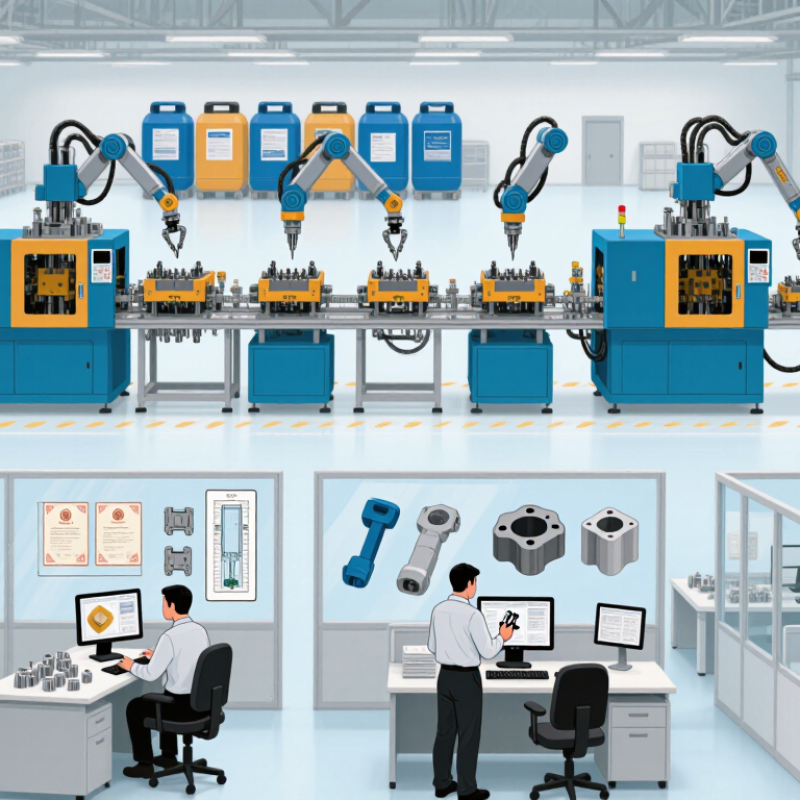
Rapid injection molding uses metal molds to produce plastic parts quickly and consistently. It suits prototypes, pilot runs, and limited production volumes. Unlike 3D printing, it creates parts with production-like strength, surface finish, and dimensional behavior.
The process begins with a design review. Engineers check wall thickness, draft angles, ribs, and likely shrinkage. A digital model then guides CNC machining or other fast mold-making methods.
After the mold is inspected, dried plastic pellets enter a heated barrel. The machine injects the melt under controlled pressure. Cooling forms the part, and ejector pins release it.
Operators inspect critical dimensions and record process data. This evidence helps buyers compare samples with drawings.
Speed is the clearest advantage. A capable supplier may deliver initial molded samples within days or weeks, depending on geometry and tooling. Rapid molding also supports functional testing, assembly checks, and early market feedback.
Material choices can include common engineering plastics, but every resin needs temperature and shrinkage review. The method is not automatically cheaper for tiny quantities. Complex slides, tight tolerances, or frequent design changes can increase cost.
In practice, experienced teams reduce risk through clear drawings, material certificates, inspection reports, and honest discussions about limitations.
One overlooked corner can still create warping. That is where careful review matters.
A reliable evaluation starts with technical evidence, not a polished website. Ask for recent samples, machine specifications, material certificates, and inspection records. Compare the supplier’s molding capacity with your part size, resin, tolerance, and expected monthly volume. A capable engineering team should review wall thickness, draft angles, ribs, and likely warpage before quoting. Their feedback may reveal design risks that a cheaper supplier ignores.
Request a clear quotation with tooling cost, sample timing, production timing, packaging, and shipping terms. Confirm who owns the mold and how maintenance is recorded. For critical parts, require dimensional reports from calibrated equipment and test samples from the intended production machine. A video audit can help, but an in-person visit provides stronger evidence of housekeeping, process control, and worker training. Check whether the supplier manages changes through written approvals.
Cost still matters, but the lowest price can hide weak inspection or unstable cycle times. I have seen attractive quotes become expensive after repeated sample corrections. That mistake is easy to make. A pilot order can expose problems before full production. Review communication speed, technical accuracy, corrective actions, and delivery history together. No evaluation is perfect. Even experienced buyers should leave room for overlooked risks, especially when specifications change during development.
For global buyers, rapid injection molding depends on more than short lead times. The supplier must connect material selection, tooling design, and production control. Experienced teams commonly process ABS, polypropylene, polycarbonate, nylon, and TPE. Each option responds differently to heat, impact, moisture, and surface requirements. A housing may need flame resistance, while a flexible seal needs controlled elasticity. Choosing resin by price alone can create costly failures later.
Tooling options should match the project’s volume and service life. Aluminum molds support fast, economical prototypes and early production runs. Hardened steel molds suit higher volumes and repeated cycles. Interchangeable inserts can reduce repair time and simplify design changes. Engineers should review draft angles, wall thickness, gate locations, and cooling channels before machining begins. A small design adjustment can prevent sink marks around ribs or uneven shrinkage near thick sections. Mold flow analysis helps, but it does not replace practical review.
Production capability includes more than molding machines. Reliable suppliers should control machine tonnage, shot size, drying conditions, cycle time, and inspection records. First-article samples, dimensional reports, and traceable material certificates improve purchasing confidence. Clear communication also matters when tolerances conflict with cost targets. No mold plan is perfect. A rushed design review can still miss warpage after assembly testing. Regular feedback between tooling, quality, and production teams makes correction faster. This disciplined approach supports consistent parts across pilot quantities and repeat orders.
For global buyers, quality control begins before steel reaches the mold. A capable China rapid injection molding supplier should document resin grades, drying conditions, mold temperatures, and inspection results. The ISO Survey 2023 recorded more than one million ISO 9001 certificates worldwide, showing how widely structured quality systems are used. Certification alone is not proof of stable parts. Audit the process behind it.
At the supplier’s facility, request first-article inspection reports, dimensional records, and material traceability. Critical dimensions should use calibrated gauges or CMM equipment, with sampling plans agreed before production. Statistical Process Control can reveal drift before a batch fails. Yet perfection is unlikely. A supplier that reports a minor deviation honestly may be more reliable than one showing flawless paperwork. That detail deserves scrutiny.
Export compliance needs equal attention. Commercial invoices, packing lists, HS codes, origin statements, and shipping marks must match the actual goods. The World Bank’s 2023 Logistics Performance Index evaluates customs, tracking, and delivery reliability, reminding buyers that logistics performance affects commercial risk. For regulated destinations, confirm REACH or RoHS documentation when applicable. Safety Data Sheets should match the shipped material, not an older substitute. Keep revision-controlled records for drawings, declarations, and inspection results. In practice, one missing document can delay a complete shipment. That is an avoidable weakness.
China Best Rapid Injection Molding Supplier for Global Buyers
Pricing, Lead Times, Communication, and Supplier Selection Criteria
Price should begin with a transparent cost structure. Ask for tooling, resin, finishing, inspection, packaging, and freight separately. A 2024 market outlook from Grand View Research valued global injection-molded plastics at about USD 211 billion in 2023. It also forecasts roughly 4.6% annual growth through 2030. Demand is growing, but low pricing still needs careful checking. A cheap quote may hide softer steel, unclear tolerances, or expensive revisions.
Lead time should include design-for-manufacturing review, mold construction, sampling, corrections, and production. In my experience, a practical schedule often needs 7–10 days for DFM feedback, 20–35 days for a standard mold, and 3–10 days for initial samples. Complex parts can take longer. Confirm the shipping date in writing. One missed assumption can damage an otherwise strong project.
Communication needs measurable habits. Request a named project engineer, weekly progress photos, dimensional reports, and prompt notice of risks. ISO’s 2023 Survey recorded more than 1.26 million ISO 9001 certificates worldwide, yet certification alone does not prove reliable molding performance. Review recent sample records, process controls, corrective-action reports, and material traceability. Ask whether the supplier can support first-article inspection and production validation. I would also inspect the factory when possible. Remote confidence is useful, but imperfect. Supplier selection should balance price, repeatability, engineering judgment, export experience, and honest communication.
Pricing, lead times, communication, and supplier selection criteria
This practical buyer benchmark shows the relative importance of key criteria when evaluating rapid injection molding suppliers. Quality consistency and total cost typically receive the highest consideration, while lead time, communication, and production flexibility remain essential for global sourcing decisions.