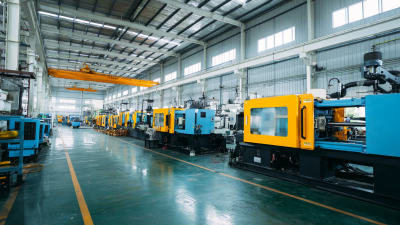
China’s molding machine market matters because it serves a large and varied plastics industry. The National Bureau of Statistics of China reported that national plastic-products output reached about 77.1 million tonnes in 2024, up 3.3% year on year. That figure does not measure machine sales. It does, however, show the scale of production that equipment makers help support.
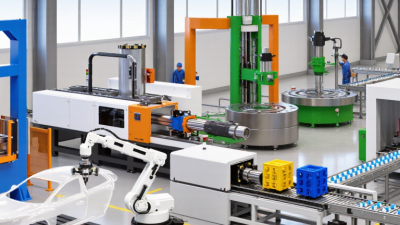
Automation is another useful part of the picture. The International Federation of Robotics’ World Robotics 2024 report recorded 276,288 industrial robot installations in China during 2023, equal to 51% of global installations. The figure covers all industrial robots, not molding-machine applications alone. Still, it points to the growing importance of automation in manufacturing, including plastics production. Small details matter: clamp force, injection repeatability, energy use, and after-sales support can shape a buyer’s experience more than a headline specification.
So, who are the top molding machine manufacturers in China? There is no single ranking that fits every buyer. A strong supplier for high-volume automotive parts may not suit a packaging or medical-products factory. This overview compares manufacturers through practical factors, including product range, technical capability, export experience, and service coverage. The evidence is not perfectly tidy; company claims and independent data do not always align. Readers should verify specifications and support arrangements directly before making a purchase decision.
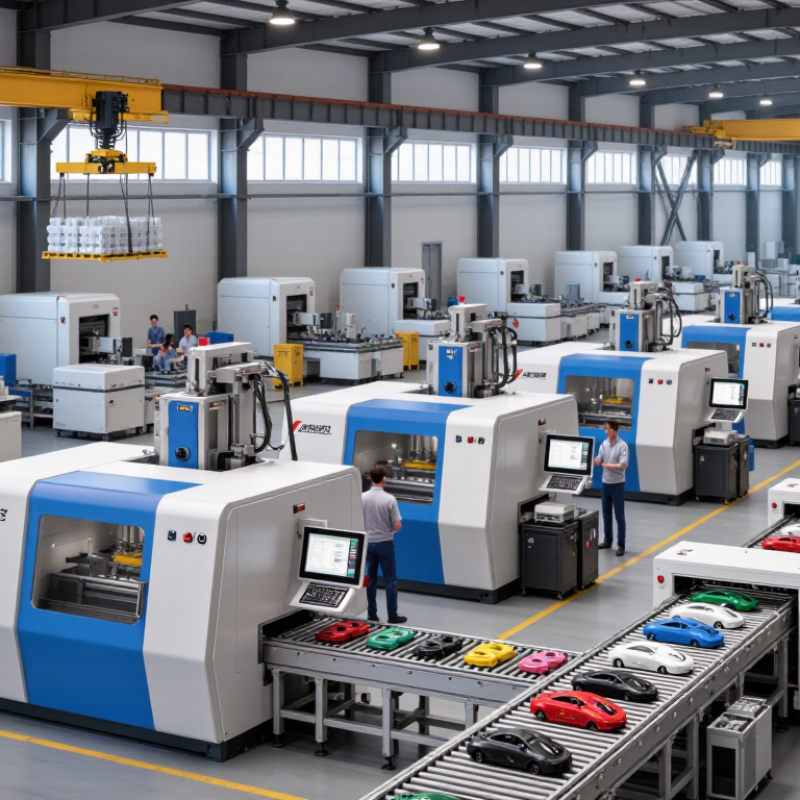
China’s molding-machine sector is best understood through three process categories: injection, blow, and extrusion. Each handles different materials, product shapes, and production demands. Comparing manufacturers by price alone can hide important differences in machine design and support.
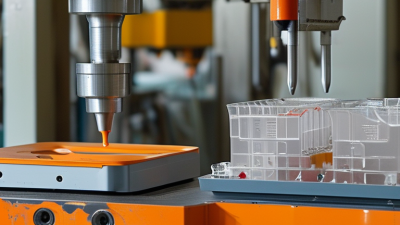
Injection molding machines force molten polymer into a closed mold under pressure. They suit detailed parts, such as appliance housings or caps, where repeatable dimensions matter. Buyers should check clamping force, shot size, cycle time, and the machine’s fit with their mold.
Small details matter. A mismatch can mean flash, uneven filling, or wasted resin.
Blow molding forms hollow products by expanding heated plastic against a mold. It is common for bottles, tanks, and similar containers. Extrusion molding pushes material continuously through a shaped die, producing items such as pipe, sheet, and profiles.
For these lines, output stability and temperature control deserve close attention. The categories can overlap in complex production systems, so terminology alone is not enough.
A useful supplier review asks for process data, sample parts, maintenance guidance, and clear commissioning responsibilities. It is easy to overvalue a fast quoted output rate; actual results depend on material, tooling, operators, and operating conditions.
A careful comparison should leave room for these variables.
China’s injection-molding sector includes machines rated from about 50 to 6,500 tonnes of clamping force. That range describes the market, not one factory’s catalogue. At the lower end, compact presses can suit small connectors, caps, and precision components. Around the middle, manufacturers commonly use machines for household parts and medium-sized housings. The largest presses can handle bulky items, such as automotive panels or appliance shells.
Clamping force keeps the mold halves closed against injection pressure. Too little force can cause flash along the parting line; too much may stress the mold or waste energy. Tonnage alone is a blunt shortcut. I would not select a machine from that number alone. Check mold dimensions, tie-bar spacing, shot capacity, material, and expected cycle time. A 500-tonne press may not fit a wide mold, even when its force seems adequate.
When comparing Chinese manufacturers, request technical sheets for the exact machine configuration, not just a product-family range. Ask how the stated force was tested, and whether the injection unit matches your resin and part weight. A sample run can reveal issues that a specification table misses. It may still leave questions. That is normal: stable production also depends on mold design, process settings, and operator training.
| Clamping-force class | Typical product examples | Common production needs | Key selection considerations |
|---|---|---|---|
| 50–150 tonnes | Small caps, connectors, household components, and compact technical parts | Small molds, relatively compact parts, and production runs where cycle time and repeatability matter | Mold dimensions, tie-bar spacing, shot capacity, and the projected area of the molded part |
| >150–500 tonnes | Appliance components, storage containers, consumer-product housings, and medium-sized fittings | A broad range of general-purpose molding jobs, including multi-cavity molds where suitable | Required clamp force, mold opening stroke, platen size, injection capacity, and material choice |
| >500–1,200 tonnes | Larger appliance housings, automotive interior parts, crates, and industrial components | Medium-to-large molds and parts with greater projected area or larger shot requirements | Mold weight and dimensions, injection-unit capacity, cooling needs, and expected production rate |
| >1,200–2,500 tonnes | Large automotive interior or exterior components, pallets, bins, and sizable appliance parts | Large molds, substantial part area, or production setups requiring higher injection capacity | Platen and tie-bar dimensions, mold handling, clamp-force calculation, and factory-floor requirements |
| >2,500–4,500 tonnes | Large vehicle panels, bumpers, industrial containers, and other large molded structures | Very large molds and parts, often requiring careful coordination of injection, clamping, and material flow | Mold transport and installation, machine footprint, energy use, and process-control requirements |
| >4,500–6,500 tonnes | Very large automotive parts, oversized pallets, and large-capacity industrial containers | Specialized large-part production using molds and handling systems designed for the machine’s scale | Site access, foundation and floor loading, mold dimensions, utilities, and end-to-end installation planning |
Note: Clamping-force classes are approximate industry groupings, expressed in metric tonnes-force. The suitable machine size depends on the mold, projected part area, material, cavity layout, shot size, and process requirements; product examples are illustrative rather than fixed specifications.
Who Are the Top Molding Machine Manufacturers in China?
Choosing a manufacturer starts with matching machine data to the part, not chasing the largest numbers. Clamping force, measured in tonnes, must resist cavity pressure across the projected part area. Too little force can cause flash; excessive force may increase energy use and wear. Ask suppliers to explain their calculation using your resin, mold layout, and expected cycle.
Shot volume, stated in cm³, should suit the part and runner system. A practical target often keeps the normal shot within roughly 20–80% of machine capacity, but resin type and screw design matter. Compare usable shot volume, not only the brochure maximum. Energy consumption in kWh/kg helps reveal operating cost. Request data from a defined test cycle, including material, cycle time, and auxiliary equipment. Figures without conditions are hard to compare.
Tips: Bring a real mold and resin specification to supplier discussions. Request a trial report showing part weight, cycle time, reject rate, and measured energy use. Check whether the machine leaves room for process adjustments. Numbers help. They do not tell everything. Energy readings can shift with operator settings and idle time, so the test conditions deserve a second look.
China’s leading molding-machine manufacturers compete across a wide range of production needs, from compact presses for small components to high-tonnage systems for larger parts. Compare machine type, clamping force, injection capacity, and control options against your actual product. A machine that looks impressive in a brochure may not suit a thin-walled part or a tight production cycle.
Look beyond headline specifications. Ask for cycle-time data using a mold and material similar to yours, and check how quickly the supplier can provide spare parts and technical support. During a factory review, inspect the platen, tie bars, guards, and control interface. Request references from users making comparable products. I would not treat one successful sample run as proof of long-term performance; wear and maintenance can change the picture.
Tips: Prepare your mold dimensions, material, target output, and quality requirements before requesting a quotation. Compare energy use and service coverage, not just purchase price. Details matter. Record each supplier’s answers in the same checklist, then verify key claims with a trial run.
Choosing capacity starts with the part and mold, not the largest machine available. Measure the part’s projected area and check the mold’s dimensions against platen size and tie-bar spacing. Clamp force must resist cavity pressure across that projected area. Too little can cause flash; too much may add cost without improving output. Check shot size, too: the part, runner, and required cushion should fit within the machine’s practical injection range.
Resin changes the calculation. A thin-walled part made from a viscous resin may need faster injection and greater pressure than a compact, easy-flowing part. Confirm the resin’s processing window with its technical data sheet, then review screw design, plasticizing capacity, and temperature control. Production volume matters, too. A steady, high-volume run may justify a faster cycle, while frequent mold changes can make flexibility more valuable than peak output. A tidy spreadsheet can miss setup delays. Recheck assumptions against the actual mold and trial data.
Tips: Ask suppliers to verify clamp force, shot utilization, and mold fit using your part drawing and resin grade. Leave room for process variation. It is easy to underestimate it.